
Short Summary: This article explores the biological makeup of roof lichen and explains why mechanical scraping is a destructive practice for asphalt shingles. We discuss how lichen anchors into roof granules and why a professional chemical treatment is the only way to protect your home’s longevity.
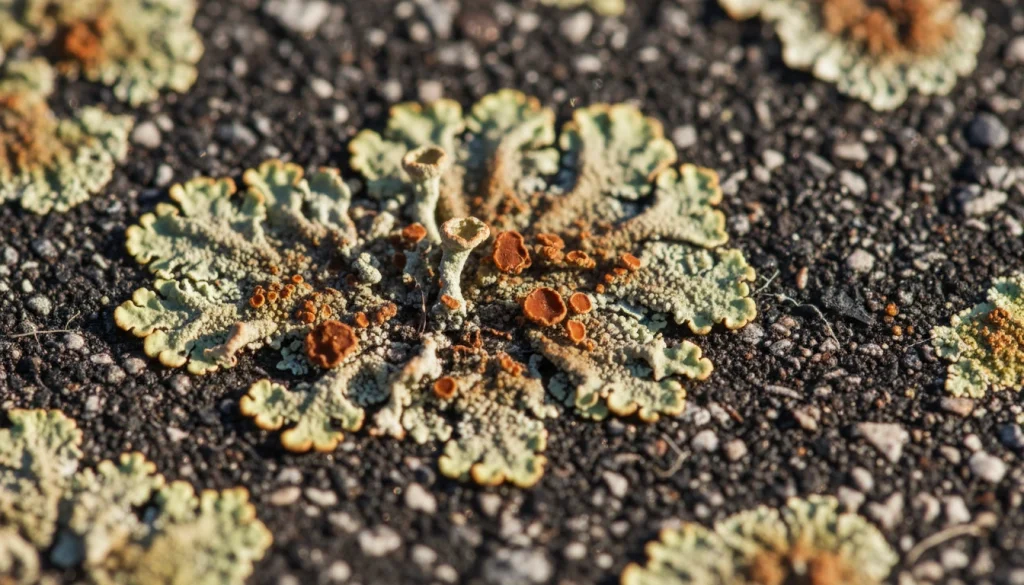
If you look up at your roof and see crusty, leaf-like patches of green or gray, you are looking at more than just a cosmetic issue. You are looking at a complex biological organism that has effectively “fused” with your home. While your first instinct might be to grab a brush or a scraper to knock it off, doing so can cause permanent damage to your roofing system.
At Vineyard Power Washing, we believe that understanding the science of lichen is the first step in maintaining a healthy home. Here is why that crusty growth is so stubborn and why physical force is never the answer.
What Exactly Is Roof Lichen?
Lichen is not a single plant. It is a symbiotic relationship between a fungus and an alga. The fungus provides the structure and protection, while the algae produce food through photosynthesis. Unlike moss, which has shallow roots, lichen produces complex root-like structures called rhizines.
These rhizines do not just sit on top of your roof. They actually penetrate the limestone fillers found in modern asphalt shingles. The lichen views your roof as a nutrient source, and it anchors itself deeply into the protective granules to stay hydrated and fed.
The Danger of Mechanical Scraping
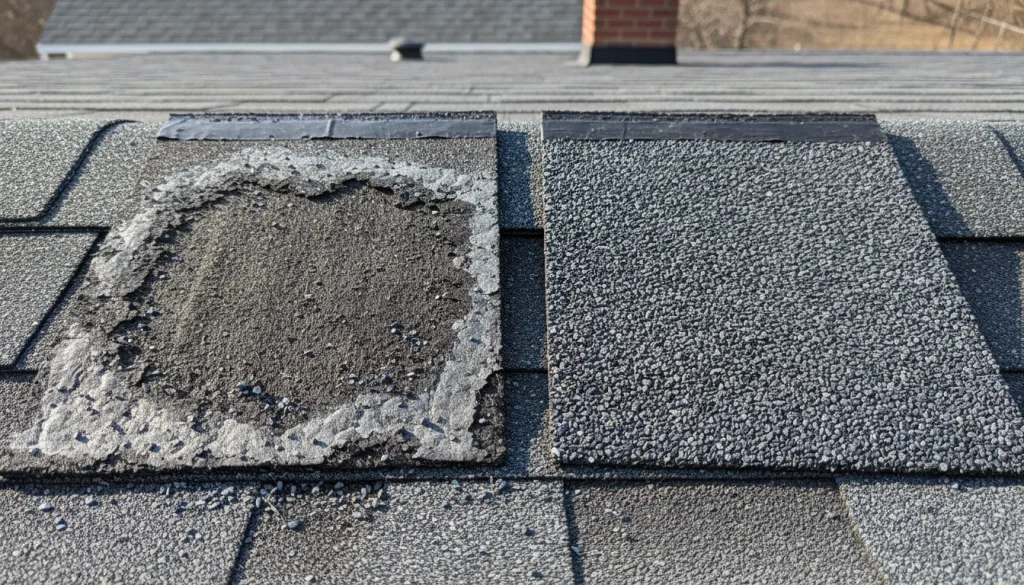
When you use a scraper, wire brush, or high-pressure water to remove lichen, you are not just removing the organism. Because the rhizines are physically intertwined with the stone granules of the shingle, pulling the lichen off inevitably pulls the granules off too.
Those granules are your roof’s primary defense against UV rays and fire. Once they are gone, the underlying bitumen is exposed to the sun, leading to brittle shingles, leaks, and a significantly shortened roof lifespan.
The Soft Wash Alternative
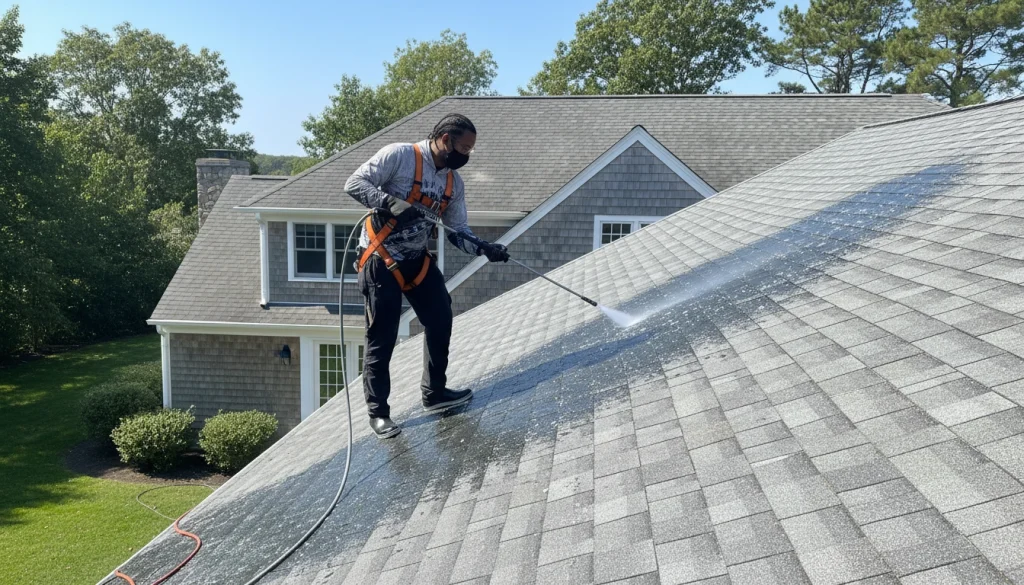
Instead of using brute force, the industry standard for safe removal is a process known as soft washing. This method uses a specialized chemical solution that targets the lichen at a cellular level.
When we perform roof cleaning, we apply a treatment that neutralizes the fungus and algae. Instead of ripping the lichen off, the treatment causes the organism to die and release its grip naturally. Over time, rain and wind gently wash away the dead remains without disturbing the shingles.
Comparing Removal Methods
Feature | Mechanical Scraping | High-Pressure Washing | Professional Soft Washing |
Removal Method | Physical force | Water impact | Chemical neutralization |
Risk of Damage | Extremely high | Very high | Extremely low |
Granule Loss | Severe | Moderate to high | None |
Kills Roots? | No | No | Yes |
Longevity | Short (regrows fast) | Short (regrows fast) | Long-lasting results |
Why Professional Treatment Matters
Many homeowners attempt to DIY their roof maintenance, but lichen is particularly resilient. If even a small amount of the biological material is left behind, it will bloom again quickly.
Furthermore, roof work is inherently dangerous. Our team is trained in the latest safety protocols and uses specialized equipment for soft washing to ensure that your property is protected. We also take great care to protect your landscaping and surrounding greenery during the process.
A Holistic Approach to Home Maintenance
Lichen doesn’t just stay on the roof. Spores can travel to your siding and decks. This is why integrated maintenance is so important. If you notice growth on your roof, it is often a sign that your siding could benefit from house washing as well. Keeping the entire exterior clean prevents the cross-contamination of biological growth and keeps your home looking its best.
The Science of Prevention
The best way to handle lichen is to never let it get a foothold. Regular inspections and preventative treatments can stop the symbiotic bond from ever forming. Once you see the “crust” of the lichen, the roots have already begun their work. Professional cleaning every few years is an investment that can save you tens of thousands of dollars in premature roof replacement costs.
Frequently Asked Questions
Can I just use a garden hose to spray off the lichen?
A garden hose does not have the pressure to remove lichen, and water alone will not kill the organism. In fact, adding water may actually encourage the lichen to grow faster since it thrives on moisture.
Why does the lichen look white after you treat it?
When lichen dies, it loses its chlorophyll and turns a white or light gray color. This is a sign that the treatment worked. It will eventually crumble and fall off the roof naturally with the weather.
Will the cleaning chemicals hurt my shingles?
No. The solutions used in professional soft washing are specifically designed to be safe for asphalt shingles. They are recommended by the Asphalt Roofing Manufacturers Association (ARMA) as the only safe way to clean a roof.
How long does it take for the lichen to disappear completely?
While the lichen dies instantly upon treatment, the physical remains may take several weeks or even months to completely wash away. This “slow release” is actually what protects your shingles from damage.
How often should I have my roof professionally cleaned?
For most homes on Martha’s Vineyard, a professional cleaning every 2 to 3 years is sufficient to prevent lichen and moss from causing structural damage.