

TL;DR: Most Martha’s Vineyard homeowners check their siding in spring and consider the job done. But a coastal winter quietly damages six other surfaces while you’re not watching: your roof, deck, driveway, pavers, dock, and outdoor furniture. This post walks through all seven, explains what has been building up on each one since October, and shows you what needs to happen before your first guests arrive this season.
You drive by your property in March and it looks fine. It probably doesn’t look fine up close.
A coastal winter on Martha’s Vineyard does something subtle. It lets a property appear untouched from the street while working quietly on every surface: the underside of your roof ridge, the wood grain of your fence posts, the joints between your patio pavers, the dock boards sitting above the waterline all winter long. Salt air travels miles inland on the Vineyard. Biological growth goes dormant in cold temperatures and wakes up fast once spring humidity arrives. By the time you can see it, it’s been there for months.
Knowing what to clean on your house in spring on Martha’s Vineyard means more than a quick look at the siding. It means knowing which surfaces are quietly accumulating damage, why each one needs a different approach, and what happens when you let them go another season. Here are the seven surfaces worth a serious look before the season starts.
What Does Winter Do to Your Roof on Martha’s Vineyard?
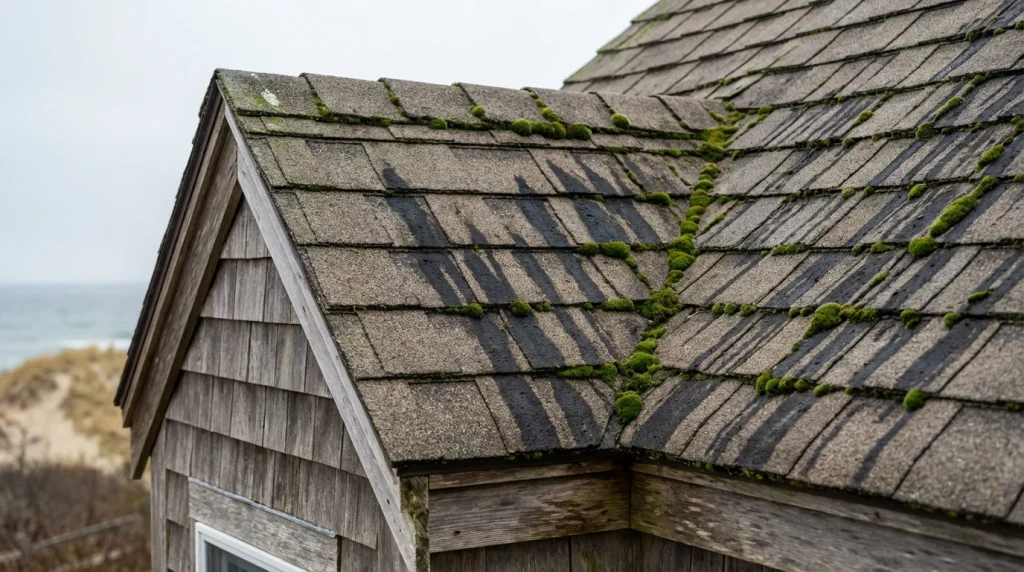
A Martha’s Vineyard winter leaves black streaks, moss patches, and dormant algae colonies on most asphalt and cedar roofs. By the time discoloration is visible, the growth has typically been present for several months. Left in place, it shortens shingle life, causes moisture infiltration, and compounds with every passing season.
The Asphalt Roofing Manufacturers Association confirms that the Eastern Seaboard is one of the two highest-risk zones in the United States for roof algae. The culprit is Gloeocapsa magma, a bacterium that spreads through the air and from roof to roof via wind. It thrives in coastal humidity and is almost always further along than it looks by the time spring arrives.
Moss is the more structurally serious problem. ARMA documentation shows that moss causes the leading edges of shingles to lift and curl, enabling lateral water movement beneath the shingle layer. That’s how a surface cleaning issue becomes a roof repair. Roof soft washing kills these organisms at the root using biodegradable solutions and low-pressure application, without the scraping or high-pressure contact that strips shingle granules and voids manufacturer warranties.
Why Does Coastal Siding Need Cleaning Every Spring, Not Every Few Years?
Salt air deposits chloride on siding surfaces continuously, not just during storms. Historical testing documented by the U.S. Department of Energy found that iron corrodes ten times faster at 80 feet from the shoreline than at 800 feet, with elevated corrosion effects extending up to 5 to 10 miles inland. On Martha’s Vineyard, that covers every property on the island.
A peer-reviewed study on marine atmospheric corrosion found that chloride deposition near shore can reach 300 mg per square meter per day. That salt doesn’t wash off in the rain. It accumulates on siding, works into paint layers, and feeds the algae and mildew that show up as green or grey streaking across your shingles by early summer.
Soft wash house washing treats the surface at the biological level rather than forcing water against it with high pressure. On cedar shingles especially, pressure washing drives moisture behind the shingle layer, creating internal mold problems that are far more expensive to address than the original surface staining. For a detailed look at why this matters for cedar-sided island homes, our guide to soft-washing cedar shingles on Martha’s Vineyard covers the specifics.
Decks and Fences: The Surfaces That Hide Damage Best
Algae doesn’t sit on wood surfaces. It works into the grain. By late winter, deck boards and fence posts on the Vineyard have had five months of moisture, salt air, and organic debris settling into the wood fiber. The surface can look dull but passable. Run your hand across a fence post and you’ll feel the bio-film that a visual inspection misses from ten feet away.
Cedar and mahogany are the dominant deck materials on the island, and both respond differently to coastal conditions. Mahogany is dense and resists surface moisture longer, but it still develops algae that embeds deep in the grain if left through a Vineyard winter. Cedar is more porous and shows biological growth faster. Either way, the correct approach is a low-pressure soft wash with appropriate dwell time, not pressure washing that strips wood fiber and ages the deck surface by years in a single visit.
Deck and fence cleaning restores the surface before warmer weather brings guests and family onto those outdoor spaces for the first time. If you have a mahogany deck, our guide to cleaning mahogany decks on Martha’s Vineyard walks through the material-specific approach before you make any decisions about method.
Your Driveway Isn’t Just Dirty, It’s Slippery
The driveway is the first surface every arriving guest drives across and walks over. It’s also the easiest to overlook during a spring walkthrough because staining, algae, and salt buildup don’t announce themselves the way a green fence post does.
Winter deposits road salt, organic runoff, and oil residue on concrete and asphalt surfaces. Algae blooms on these surfaces early in spring, often before it’s visible to the eye, and it’s slippery in a way that creates real safety issues for anyone walking from the car. Salt staining turns grey surfaces darker and uneven. Oil residue from vehicles parked over winter sits on the surface and spreads underfoot.
Driveway cleaning removes all of it and restores the surface before guests arrive. For vacation rental hosts, a clean driveway is part of the first impression your listing photos and in-person experience depend on.
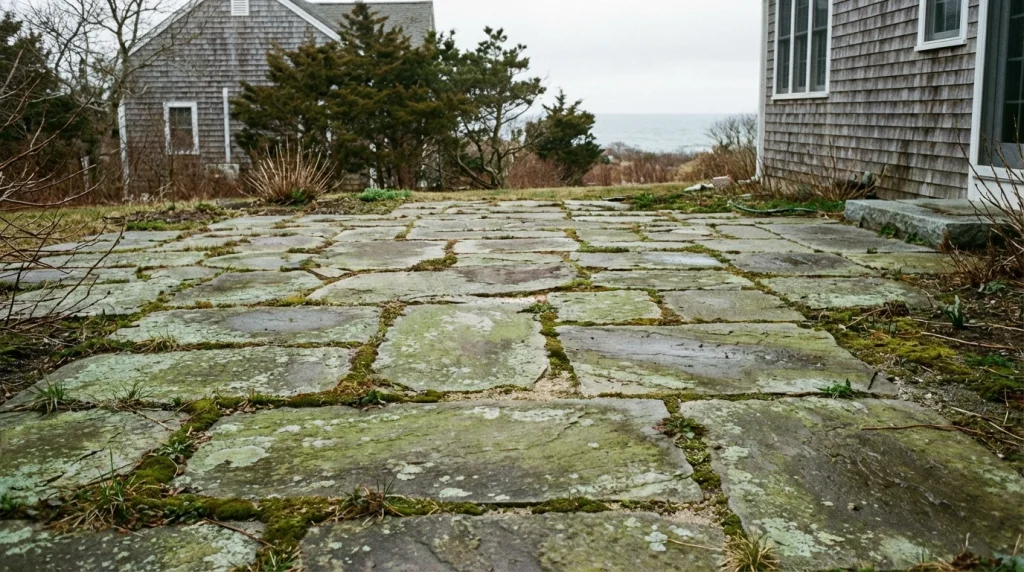
Why Do Pavers Look Worse After Every Martha’s Vineyard Winter?
Martha’s Vineyard pavers go through approximately 49 freeze-thaw cycles per year. Each cycle forces water into paver joints where it expands by about 9% when it freezes, widening gaps and loosening surrounding stones. Salt air compounds the problem significantly. A 2024 peer-reviewed study found that concrete exposed to salt solution loses structural integrity at roughly 100 to 150 freeze-thaw cycles, which is less than half the threshold for concrete exposed to fresh water alone.
Research published in a 2024 peer-reviewed materials study found that salt solution exposure increases concrete water absorption by 32.6% after just 30 freeze-thaw cycles. That means paver joints on the Vineyard are becoming progressively more porous and fragile with each passing winter. Pool surrounds, stone patios, entryway pavers, and garden paths all fall in this category.
High-pressure washing is the most common homeowner mistake on stone surfaces. It dislodges the polymeric sand that stabilizes the paver bed, chips natural stone edges, and drives biological staining deeper rather than killing it at the source. Paver and stone cleaning uses biodegradable solutions with appropriate dwell time to kill algae and moss at the biological level and restore color without damaging the structure beneath.
A complete spring refresh of your outdoor living spaces also covers the lawn and landscaping around those surfaces. For lawn care and complete property maintenance on the island, Estate Care handles that side of the prep alongside your exterior cleaning.
Is an Unclean Dock a Liability Issue for Martha’s Vineyard Homeowners?
Yes. Algae and organic film accumulate on dock surfaces over winter and create slip conditions that are nearly invisible until the surface is wet. According to the Maritime Injury Guide citing OSHA data, slips, trips, and falls account for 43% of all reported maritime injuries, with an average fall injury cost of $182,000. For vacation rental hosts with waterfront properties, an unclean dock is both a safety hazard and an insurance exposure.
The analysis is direct: wet surfaces, weather conditions, and deteriorating deck components are among the top contributing factors to maritime slip incidents. On a Martha’s Vineyard dock that hasn’t been cleaned since last summer, all three apply simultaneously by the time the first guest steps on it in May.
Beyond liability, cleaning near Massachusetts coastal water bodies requires biodegradable solutions. High pressure near the water disturbs marine sediment, introduces chemical runoff, and is non-compliant with environmental standards that govern coastal cleaning on the island. Dock and pier cleaning with professional-grade, biodegradable solutions is the only method that is both effective and responsible for Vineyard waterfront properties.
Outdoor Furniture: More Degraded Than It Looks
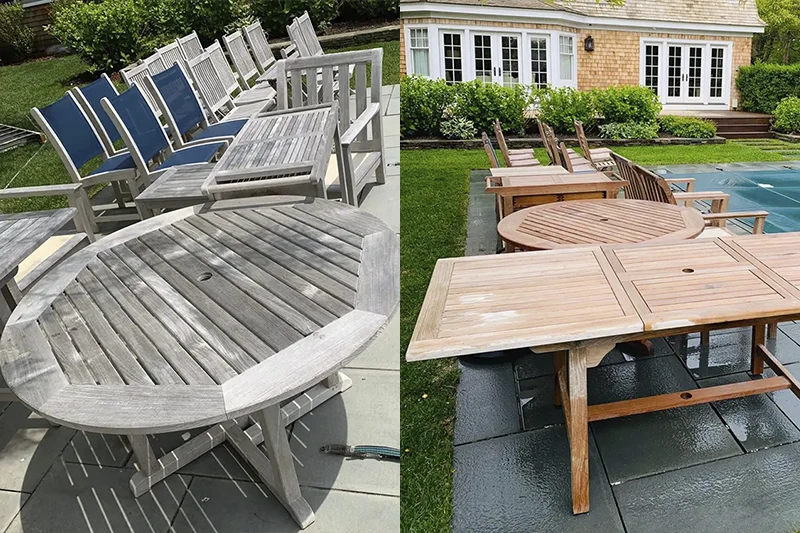
Furniture stored under covers all winter develops mildew faster than most owners expect. A cover traps moisture rather than eliminating it. By March, fabric cushions, wicker frames, and resin furniture have been sitting in their own humid microclimate for five months, and the mildew that’s built up is not visible until the cover comes off and the piece dries in sunlight.
Metal furniture faces a different problem. Peer-reviewed research on marine atmospheric corrosion shows that chloride deposition near the Vineyard’s shoreline reaches concentrations that accelerate metal surface breakdown regardless of protective covers. Aluminum, powder-coated steel, and wrought iron all corrode faster in this environment than the same materials would inland.
The practical reality: furniture that looks dull but passable in March will look genuinely worn once guests are sitting on it in full summer light. Cleaning before the season restores the surface and extends the useful life of pieces that would otherwise need replacing on a shortened cycle. Outdoor furniture cleaning handles fabric, resin, metal, and wicker surfaces safely, without the heat or pressure that damages coatings or warps frames.
Does a Well-Maintained Exterior Actually Affect Your Property’s Value?
Yes, and the data is specific. A University of Texas at Arlington study found that homes with strong curb appeal sell for an average of 7% more than comparable properties, rising to 10 to 11% in slower markets. The 2024 Cost vs. Value Report found that New England produces the highest exterior maintenance return on investment of any US region, with siding-related projects returning 116% compared to 80% nationally.
For vacation rental hosts, the ROI case is even more direct. Guests form their opinion of a rental property before they open the front door. If your exterior looks neglected, that impression follows them inside and appears in your reviews. Our 5-star rental prep checklist walks through what the highest-rated Vineyard rentals do differently before each season opens.
The seven surfaces in this post aren’t minor details. They’re the ones that determine whether a property looks well cared for or quietly run down. On the Vineyard, where summer guests and rental competition are both operating at a high level, that difference shows up in bookings, reviews, and long-term property value.

Conclusion
A coastal winter doesn’t announce the damage it leaves behind. It works quietly on seven different surfaces while a property sits through fall and winter. By March, all of it needs attention before the season starts.
Vineyard Power Washing can cover all seven surfaces in a single visit: house washing, roof, deck, driveway, pavers, dock, and outdoor furniture. One assessment, one transparent quote, one scheduled day of work before your guests arrive. We’ve handled pre-season exterior cleaning on the island since 1978, and we know exactly what a Vineyard winter leaves behind on each of these surfaces.
Get a free quote before April slots close. Your property deserves to be ready when the season starts, not the week after.
Frequently Asked Questions
Can Vineyard Power Washing clean all 7 of these surfaces in a single visit?
In most cases, yes. We schedule full-property exterior cleaning where house washing, roof, deck, driveway, pavers, dock, and outdoor furniture are all handled in one or two consecutive days. Larger properties or those with particularly heavy biological growth may require a follow-up visit. When you request a quote, we assess the full scope and give you a clear timeline before any work begins.
How often should Martha’s Vineyard homeowners clean these surfaces?
Most surfaces on a coastal Vineyard property benefit from professional cleaning at least once a year, in spring before the season starts. Properties within a few hundred feet of the water, or those with significant shade cover that accelerates biological growth, often benefit from a second cleaning in fall. We can recommend a frequency that matches your property’s specific exposure and materials during the initial assessment.
Is soft washing safe on all of these surfaces, including natural stone and wood?
Yes. Soft washing uses low-pressure application combined with professional-grade, biodegradable cleaning solutions. It’s safe for cedar shingles, mahogany, asphalt roofing, natural stone, pavers, and composite materials. The solution does the work rather than water pressure, so surfaces aren’t eroded, cracked, or saturated. It’s the only method we recommend for island homes, and it’s the approach that protects original materials rather than aging them.
What’s the biggest mistake Vineyard homeowners make when cleaning these surfaces themselves?
Using high pressure on the wrong surfaces. A pressure washer works on poured concrete, but it strips cedar siding, dislodges paver sand, damages shingle granules, and drives biological staining deeper into wood grain rather than killing it at the root. On a coastal property where surfaces are already under accelerated stress from salt air and freeze-thaw cycles, a pressure wash can do more damage in an afternoon than a full winter of natural wear.
Do I need professional cleaning if my property looks fine from the street?
Most likely yes. Biological growth, salt haze, and freeze-thaw damage are not visible from street distance in March, but become obvious by June when they’re in full summer sunlight with guests standing next to them. By the time algae, moss, or mold is clearly visible, it has typically been present for months and is deeper into the surface than it appears. Professional cleaning in spring catches these problems at an early stage, when they’re easier and less expensive to address.