
TL;DR: Martha’s Vineyard docks collect algae, marine growth, salt deposits, and tannin staining every winter. Standard pressure washing damages dock wood and sends chemicals directly into the water below. Soft washing with biodegradable, marine-safe solution is the correct method for dock surfaces near coastal waters. This guide covers what accumulates on island docks, why slippery surfaces create liability exposure, how professional soft washing works near water bodies, and how often harbor and pond docks should be cleaned before boating season opens.
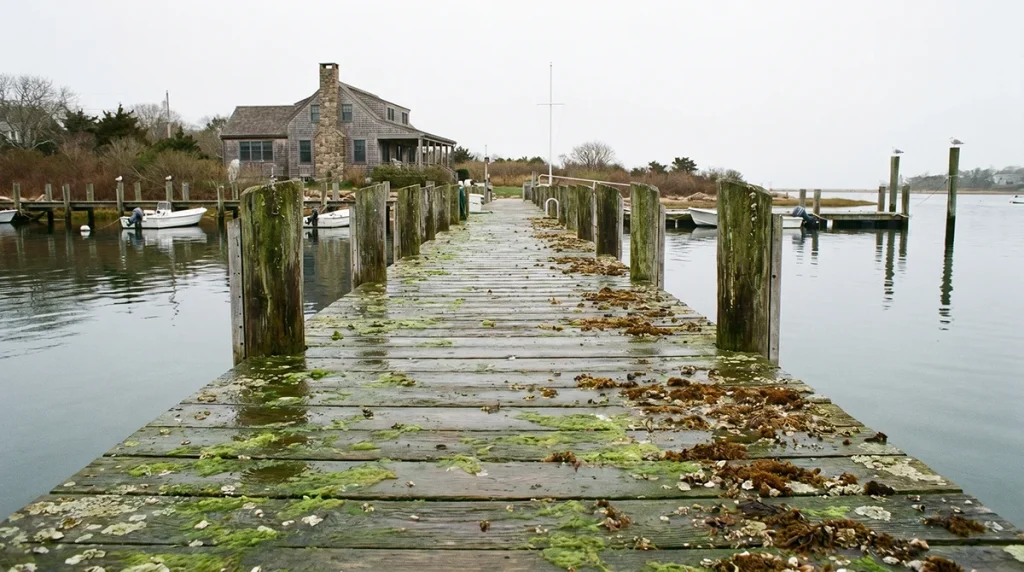
Every winter on Martha’s Vineyard, waterfront properties face the same problem. When the boats come out and the dock sits idle through November, December, and the coldest months of a New England winter, biological growth moves in. By April, the surface you were walking across in September has a coat of algae, marine growth, and salt residue that turns the dock into a hazard.
The fix sounds simple. Most property owners reach for a pressure washer. That is the wrong call, and this guide explains exactly why.
What Accumulates on Martha’s Vineyard Docks Over a New England Winter
Martha’s Vineyard docks face a more demanding set of conditions than inland surfaces. Every dock on the island is dealing with some combination of the following by the time spring arrives.
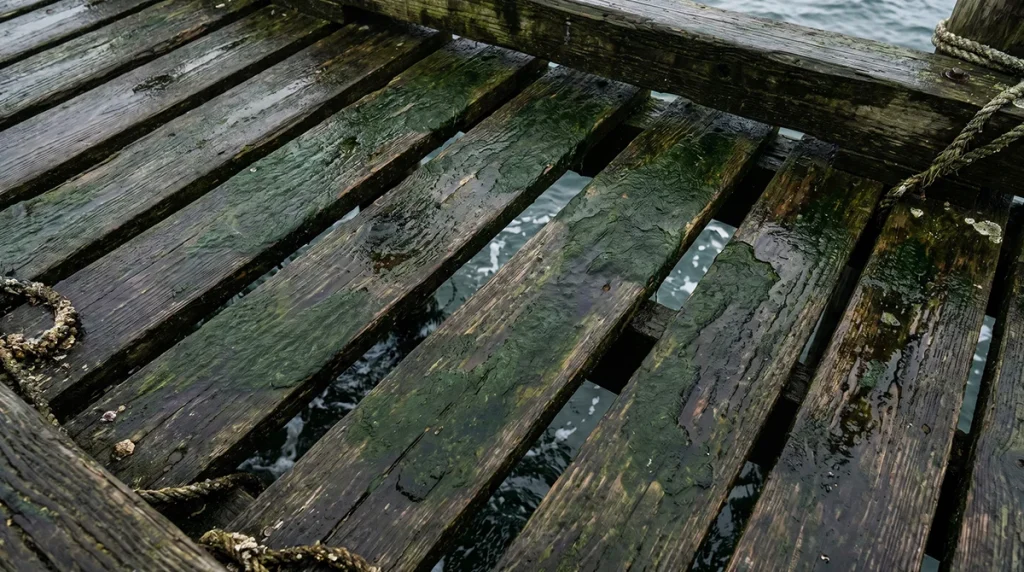
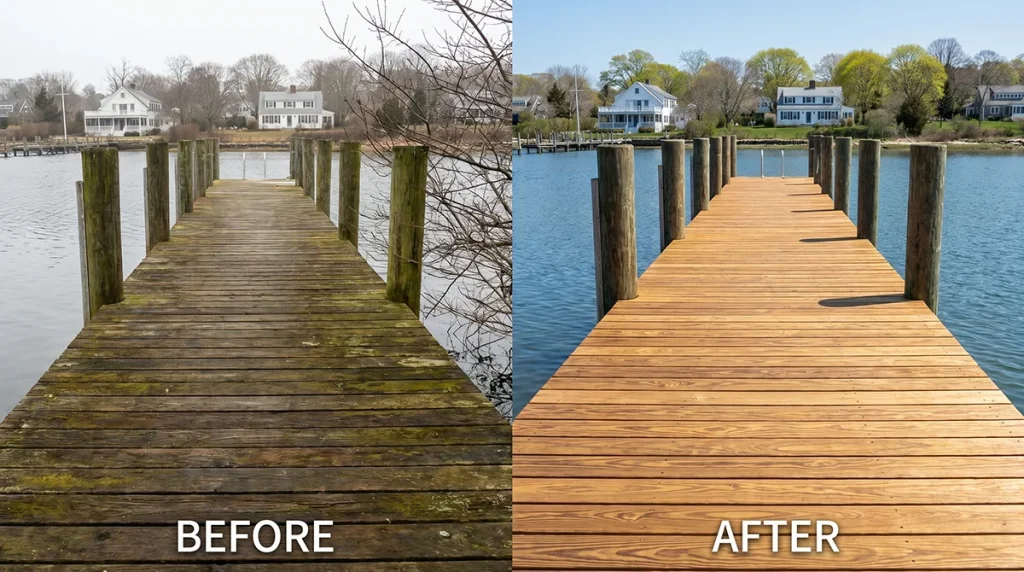
Algae. Green and black algae are the most visible problem. They colonize dock planks quickly in the off-season, especially on surfaces that stay damp or receive partial shade. Algae growth is the primary source of slippery surfaces and the most immediate safety concern.
Marine growth. Saltwater docks in Edgartown Harbor, Oak Bluffs Harbor, and Vineyard Haven Harbor deal with marine organisms on the lower structure of the dock. The upper surface accumulates sea spray and marine film that builds up through the winter months.
Salt deposits. Months of salt air and wave action leave a mineral deposit on wood and composite surfaces that dulls the material and traps moisture. Salt also accelerates oxidation of metal fasteners and dock fittings over time.
Tannin staining. Freshwater pond docks, including those on Tisbury Great Pond, Sengekontacket Pond, and other Great Ponds, develop tannin staining from leaves and organic runoff. The staining turns dock wood a dark orange-brown color and is significantly harder to remove the longer it sets.
Organic debris. Leaves, decaying seaweed, and winter windfall accumulate on dock surfaces and hold moisture against the wood. That sustained moisture is what accelerates biological growth through the winter and into spring.
The result, by April, is a surface that looks neglected and functions as a slip hazard for anyone who steps onto it before it has been properly cleaned.
Why Slippery Docks Are a Liability Issue
A dock covered in algae is not just a cosmetic problem. The U.S. Coast Guard’s annual recreational boating statistics consistently identify slips and falls as a leading category of non-fatal boating-related injuries. Algae growth reduces surface traction significantly, and boat shoes or bare feet on algae-covered wood can result in a fall directly onto a hard dock surface or into cold water.
For Martha’s Vineyard property owners, the liability exposure is real. A guest, a family member, or a contractor stepping onto a dirty dock in the first weeks of the season creates a risk that a single morning of professional cleaning eliminates entirely. The dock surfaces most likely to be walked first in spring are also the least likely to have been inspected since last fall. That combination is where accidents happen.
Pre-season cleaning is not just about appearance. It is about making the surface safe before anyone uses it.
Why Pressure Washing Damages Dock Wood and Creates an Environmental Problem
The instinct to reach for a pressure washer is understandable. It looks thorough. The problem is that high-pressure washing creates two specific failures on dock surfaces.
It damages the wood. Dock planks are typically older softwood or treated lumber that has been through years of saltwater exposure, UV degradation, and freeze-thaw stress. High-pressure water forces into grain lines, splits weathered fibers, and drives water into fastener holes and joint edges. The surface looks cleaner for a week, then wears and splits faster because the top layer of wood fiber has been destroyed. Repeated pressure washing compresses this damage cycle and accelerates the structural wear that dock boards would otherwise take years to develop.
It sends material directly into the water. A dock sits above the water it was built to access. Everything removed by a pressure washer goes somewhere, and on a dock, it goes through the gaps between planks or off the edges and straight into the water below. Biological debris, surface algae, and any cleaning chemical applied are discharged directly into the water body without any control over what enters the coastal environment.
The Massachusetts Wetlands Protection Act governs activities within buffer zones of coastal waters, harbors, and inland ponds. Chemical applications and surface runoff near regulated water bodies require careful management. Pressure washing on a dock, positioned directly above the water, makes that runoff management impossible.
Soft washing solves both problems at the source.
How Soft Washing Works Near Water Bodies
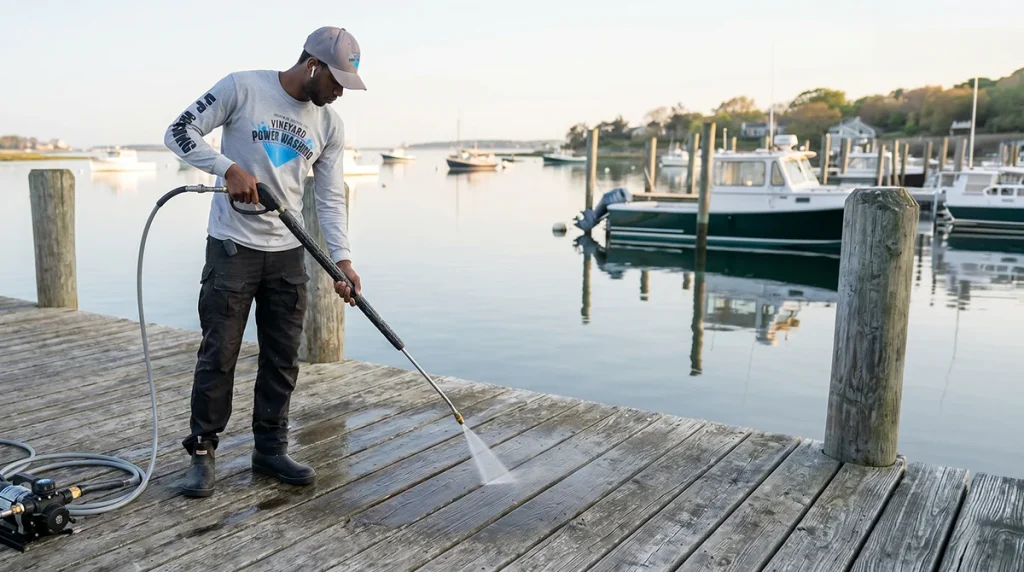
Dock and pier cleaning with a soft-wash system uses low-pressure application of a professional-grade, biodegradable solution rather than mechanical force to clean the surface. The process is fundamentally different from pressure washing in one key way: the solution does the work, not the water pressure.
The process follows three steps: apply the solution at low pressure, allow it to dwell on the surface long enough to kill biological growth at the root level, then rinse gently. That dwell time is what makes soft washing effective where pressure washing falls short. Pressure washing displaces visible growth from the surface without killing the organism. Biological growth returns within weeks. Soft washing sterilizes the surface, which slows regrowth significantly and produces results that last through the full boating season and often beyond.
The biodegradable solutions used by Vineyard Power Washing are formulated for use on marine-adjacent surfaces. They break down before reaching harmful concentrations in the water below and do not carry the chemical load that undiluted bleach-forward applications do. The low-pressure application controls where the solution goes and minimizes the volume of material entering the water.
How Often Should a Martha’s Vineyard Dock Be Cleaned: Harbor vs. Pond
The right cleaning frequency depends on whether the dock is in saltwater or freshwater and how much shade and organic debris it receives each season.
Harbor and saltwater docks (Edgartown Harbor, Oak Bluffs, Vineyard Haven): annual cleaning is the standard recommendation. Saltwater exposure, marine biological activity, and direct harbor spray create conditions where biological growth accumulates faster than on freshwater surfaces. Pre-season cleaning in April, before boats go back in and dock foot traffic begins, is the right timing. By May, traffic on the dock increases significantly and the surface needs to be clean and dry.
Freshwater pond docks (Tisbury Great Pond, Sengekontacket, Farm Pond, Squibnocket Pond): cleaning every one to two years is typically sufficient, depending on tree cover and the level of organic runoff from surrounding vegetation. Pond docks with heavy leaf fall or extended periods of shade accumulate tannin staining faster and benefit from more frequent attention. Tannin staining treated annually is much easier to remove than staining allowed to set over two full seasons of leaf fall.
Any dock with visible algae growth, discoloration, or a surface that feels slippery underfoot should be scheduled for cleaning regardless of when it was last serviced. The calendar is a guide. Visible growth is the actual standard.
What a Professional Dock Cleaning Looks Like Start to Finish
The process is straightforward and does not require the property owner to be present for the work.
Vineyard Power Washing’s dock cleaning begins with a walkthrough inspection of the dock surface, structure, and any fixed fittings. This identifies areas of heavier growth or concern before cleaning starts and informs how long the solution needs to dwell. The biodegradable solution is then applied across the full dock surface at low pressure, starting from the landward end and working toward the water.
The solution dwells on the surface, typically for twenty to thirty minutes depending on the level of biological growth and the type of staining present. During that dwell period, the active agents are working at the root level of the algae and organic growth, killing the organism rather than simply displacing it from the surface.
After the dwell period, the surface is rinsed at low pressure, working in the same direction as the initial application. The result is a clean, sanitized dock surface with no residual chemical buildup and no mechanical damage to the wood or fittings. The dock dries naturally and is safe for use within a few hours of completion.
For waterfront properties where both the dock and the home exterior need spring attention, the same three-step soft-wash process that handles house washing covers the dock as well. Both can typically be handled in a single property visit.
Conclusion: Clean the Dock Before the Boats Go Back In
Boating season on Martha’s Vineyard opens in earnest in May. The window between the April ferry schedule expansion and the first weekend the boats go out is the right time to schedule dock cleaning: the dock is accessible, the weather allows for the work, and the surface will be clean and fully dry before the first foot traffic of the season begins.
A slippery dock is a liability. Repeated pressure washing damages dock wood faster than normal wear. And a professionally cleaned dock surface, like a clean home exterior, signals that a waterfront property was maintained and prepared for the season.
Contact Vineyard Power Washing to schedule pre-season dock cleaning before May. Learn more about our team and 45 years of experience cleaning waterfront and coastal properties across all six Vineyard towns.
Frequently Asked Questions
How often should a Martha’s Vineyard dock be cleaned?
Harbor and saltwater docks in Edgartown, Oak Bluffs, and Vineyard Haven should be cleaned annually, ideally in spring before boating season. Freshwater pond docks can typically be cleaned every one to two years depending on shade coverage and organic debris levels. Any dock with visible algae growth or a slippery surface should be cleaned regardless of when it was last serviced.
What is the best way to clean a wooden dock?
Soft washing is the correct method for wooden dock surfaces. Low-pressure application of a biodegradable solution kills algae and biological growth at the root level without damaging wood fibers the way high-pressure washing does. The solution is applied at low pressure, allowed to dwell on the surface, and then rinsed gently. Results last significantly longer than pressure washing because the biological growth is sterilized rather than just displaced.
Does soft washing damage wood docks?
No. Soft washing uses low pressure rather than high-pressure mechanical force. The solution does the cleaning work through dwell time rather than water pressure, which makes it suitable for older dock wood, treated lumber, and composite decking that high-pressure washing would damage over time.
Is pressure washing a dock safe for the environment?
Pressure washing a dock sends biological debris, surface contaminants, and any cleaning chemicals directly into the water below through the gaps between dock planks or off the edges. This adds biological and chemical load to coastal harbors and freshwater ponds. Soft washing with biodegradable solutions formulated for marine-adjacent surfaces is the environmentally appropriate method for docks near coastal waters.
When is the best time to schedule dock cleaning on Martha’s Vineyard?
April is the ideal window for pre-season dock cleaning on Martha’s Vineyard. The dock has been sitting idle through the winter, biological growth has had months to accumulate, and scheduling in April ensures the surface is clean, dry, and safe before boating season opens in May. Vineyard Power Washing’s spring schedule fills early, and booking in advance secures your pre-season date.