
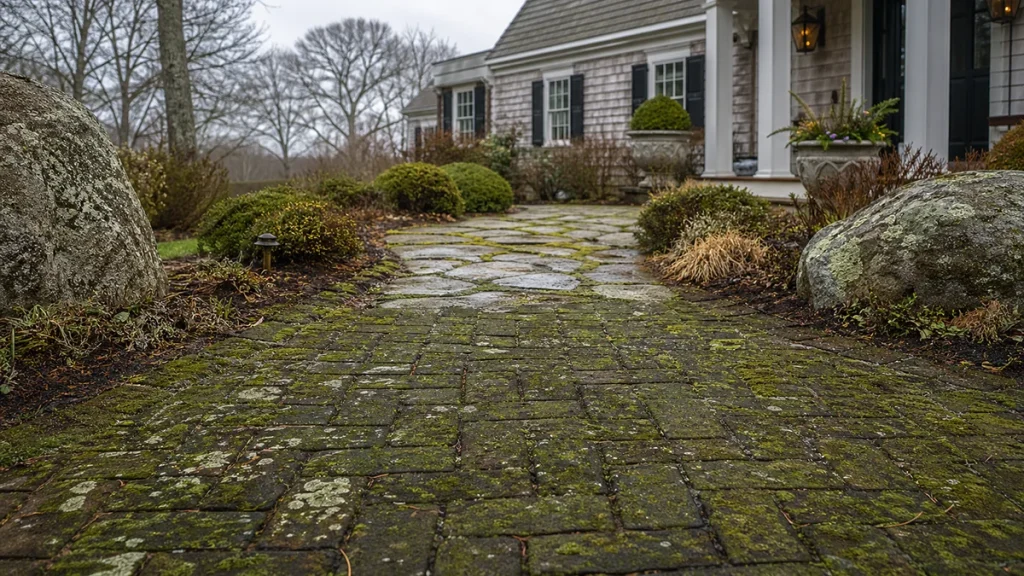
TL;DR: Martha’s Vineyard pavers collect algae, moss, lichen, and salt deposits every winter. High-pressure washing is the most common mistake: it strips joint sand, chips stone edges, and spreads biological growth rather than killing it. Soft washing with a biodegradable solution kills growth at the root level and protects the structural integrity of paver joints and natural stone surfaces. This guide covers what accumulates on island paver surfaces, why pool surrounds and entryway pavers are especially vulnerable, and what a professional soft wash cleaning looks like from start to finish.
Every spring on Martha’s Vineyard, the same pattern plays out on driveways, walkways, pool surrounds, and garden paths. The winter leaves biological growth behind, and by late April, surfaces that looked clean in October are coated in algae, moss, or dark lichen staining.
Most property owners reach for the obvious solution: a pressure washer. That is the wrong call for paver and stone surfaces, and this guide explains exactly why.
What Accumulates on Martha’s Vineyard Pavers Over a Coastal Winter
Martha’s Vineyard’s combination of coastal humidity, salt air, freeze-thaw cycles, and organic debris from surrounding vegetation creates conditions that are harder on exterior surfaces than most mainland properties experience. By spring, paver surfaces on the island are dealing with several layers of accumulation.
Algae. Green and black algae are the first growth to appear on paver surfaces that retain moisture. Shaded walkways, pool coping, and north-facing driveways develop algae quickly through the fall and winter. Green algae turns the surface slippery and signals that biological activity is underway in the joint gaps as well as on the surface itself.
Moss. Moss takes hold in paver joints and between stone slabs, especially on surfaces that receive partial shade and retain moisture between rain events. On Martha’s Vineyard, where coastal humidity stays elevated even during dry spells, moss grows aggressively in joint material and begins to push pavers apart over time if left untreated.
Lichen. Lichen is the most persistent biological organism found on paver and stone surfaces. Unlike algae or moss, lichen bonds directly to the stone and produces organic acids, particularly oxalic acid, that attack the mineral composition of the surface beneath. Peer-reviewed research published in Air, Soil and Water Research confirms that lichen-mediated biodeterioration occurs through both chemical dissolution of minerals and physical disruption from hyphal penetration into the stone surface. Lichen appears as gray, white, or dark crusty patches and cannot be removed without the correct solution and adequate dwell time. The longer it is left untreated, the deeper the bond becomes.
Salt haze. Salt air deposits a fine mineral film on all exterior surfaces throughout the winter. On pavers, salt accumulation creates a hazy residue that dulls stone, traps organic material, and accelerates biological growth by holding moisture against the surface.
Tannin staining. Fallen leaves, plant material, and organic runoff from surrounding beds leave tannin staining on light-colored stone and concrete pavers. Left through the winter, that staining deepens and becomes significantly harder to remove by spring.
The combination of these layers is what gives paver surfaces that dull, neglected appearance by late April, and it is what makes the correct treatment method more important than the speed of cleaning.
Why Pool Surrounds and Entryway Pavers Are Especially Vulnerable
Not all paver surfaces accumulate growth at the same rate. Two surfaces on Martha’s Vineyard properties see particularly heavy biological buildup by spring: pool surrounds and entryway pavers.
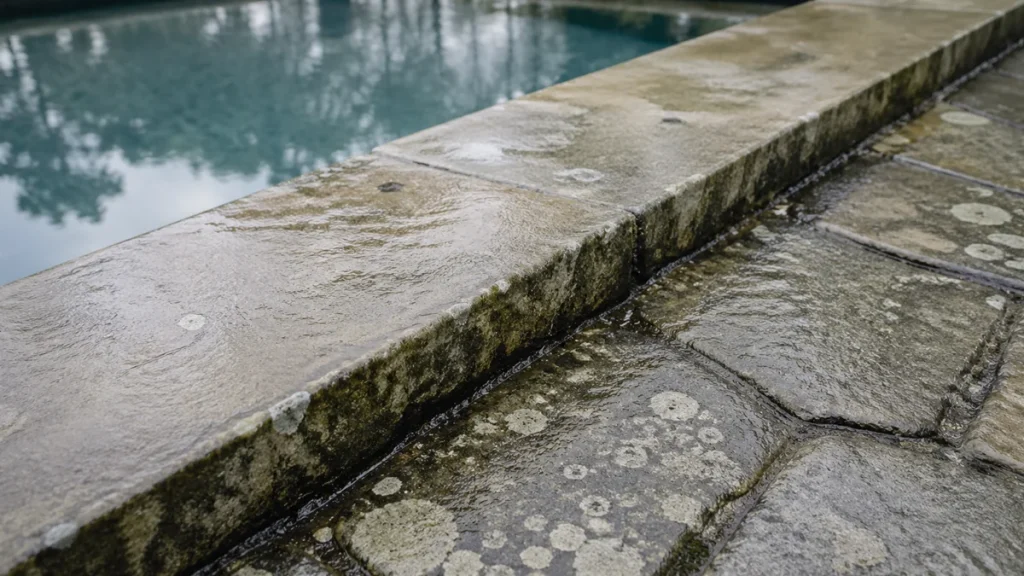
Pool surrounds. Paver and natural stone surfaces around pools stay consistently wet through the summer and hold moisture through fall and winter from rain and coastal humidity. That sustained moisture is ideal for algae and moss growth, and pool coping with its rough texture and joint gaps provides exactly the surface conditions organisms prefer. The National Floor Safety Institute identifies walking surfaces as contributing to 55% of all slips, trips, and falls. Algae on a pool surround compounds that risk directly: bare feet on algae-covered stone around a pool is one of the most preventable hazards on any island property, and pre-season cleaning eliminates it before anyone uses the area.
Entryway and front path pavers. Entryway pavers are the first surface guests and visitors step onto. On island properties used as vacation rentals, the exterior condition sets expectations for everything inside. Algae growth, dark lichen staining, or moss pushing through paver joints signals neglect, regardless of how well-maintained the interior is. For rental hosts preparing for summer bookings, entryway paver cleaning before the first arrivals is one of the highest-return exterior cleaning tasks on the property.
The High-Pressure Washing Mistake: What It Actually Does Wrong
The instinct to pressure wash paver and stone surfaces is understandable. High pressure moves visible growth off the surface quickly. The problem is that pressure washing creates specific, compounding damage on paver surfaces that property owners often do not recognize until the structural consequences appear.
Joint sand loss. Pavers are set in a bed of joint sand that holds them stable, prevents shifting, and limits the space biological growth needs to take root between units. As paver specialists note, high-pressure washing blows joint sand out from between pavers, weakening their structure and leaving gaps that allow organic debris to accumulate faster. Once that joint material is gone, moss and weeds establish in the exposed gaps far more quickly than they would on a fully intact surface.
Surface damage. Natural stone, brick, and older concrete pavers have surface integrity that high pressure degrades over time. Directed pressure erodes the top layer of softer stone, chips edges on brick pavers, and creates micro-pitting in concrete that accelerates future biological growth by producing a rougher surface for organisms to grip.
Biological spread. High pressure displaces algae and moss from the surface but does not kill the organism. Pressure washing aerosolizes biological material and redistributes it across the surrounding area, including onto adjacent surfaces, into joint gaps, and onto nearby plantings. Biological growth returns to a pressure-washed paver surface within weeks because the organism was displaced rather than sterilized.
Water intrusion and frost heave. High-pressure water forced into paver joints and stone edges can saturate the base layer beneath the surface. On Martha’s Vineyard, freeze-thaw cycles occur multiple times each winter, and as Rochester Concrete Products explains, managing moisture in the base is the key factor in preventing frost heave: when water in a saturated base freezes, it expands and can push pavers upward and out of level. A single season of pressure-washing-induced water intrusion can contribute to the uneven, lifted paver surface that develops over subsequent winters.
How Soft Washing Kills Growth Without Structural Risk
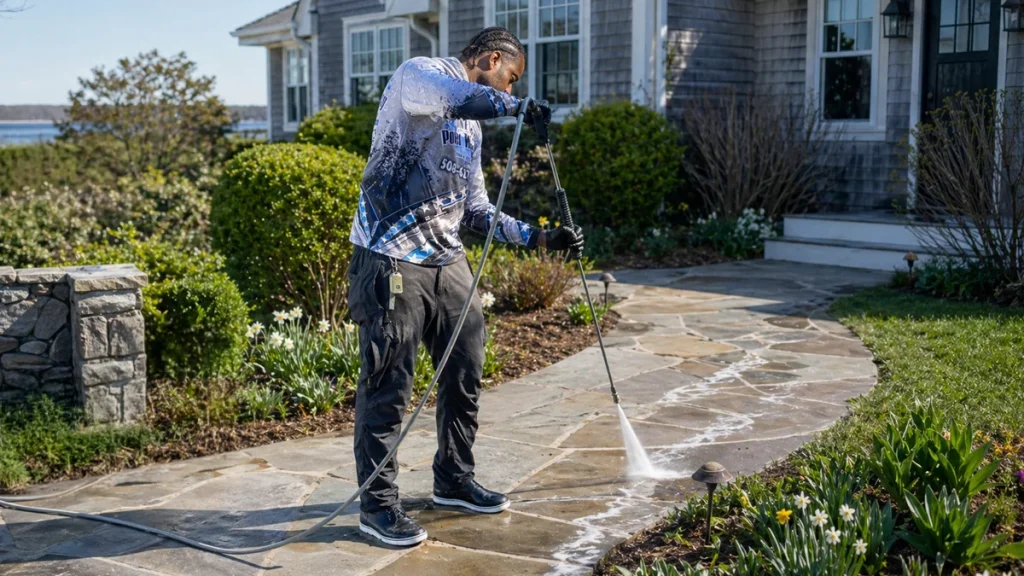
Paver and stone cleaning with a soft-wash system applies a professional-grade, biodegradable solution at low pressure rather than using mechanical force to remove biological growth. The approach solves every specific failure of pressure washing.
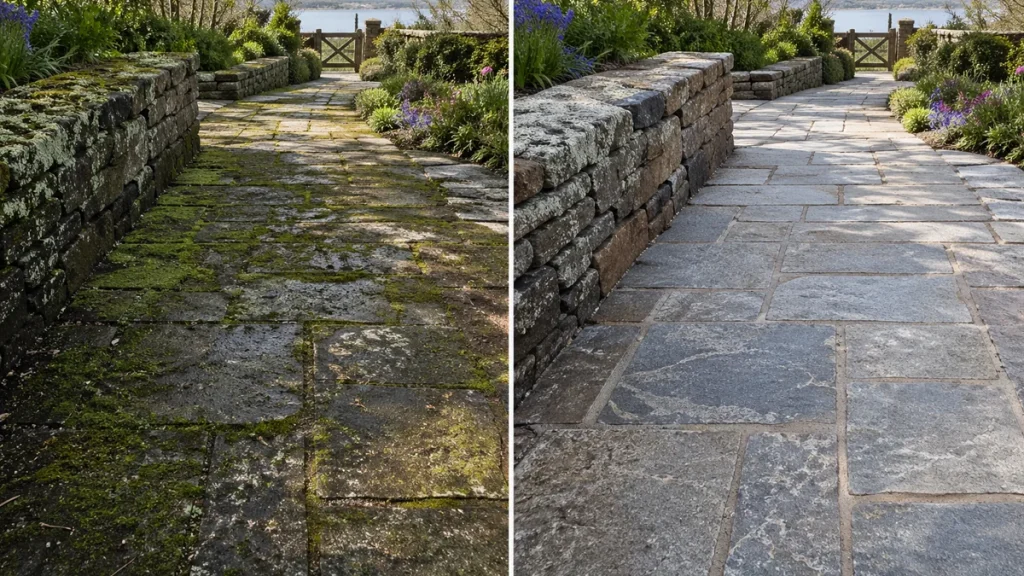
The process follows the same three steps used across all of Vineyard Power Washing’s exterior cleaning work: apply the solution at low pressure, allow it to dwell on the surface long enough to kill biological growth at the root level, then rinse gently. The dwell time is what makes the difference. Algae, moss, and lichen are killed by the solution rather than displaced from the surface. The organism cannot regrow from dead root material the way it does from displaced live material. Results from a proper soft wash treatment last a full season and often longer.
Low-pressure application also protects joint sand. The solution is applied in a controlled manner that does not displace the material holding paver units in position. After rinsing, the joint sand and structural integrity of the paver surface are intact.
For stone surfaces where lichen has bonded to the material, the solution breaks that bond chemically rather than by scraping or mechanical pressure, which would damage the stone beneath. The biodegradable formulation is compliant with Massachusetts pesticide and chemical application regulations governing outdoor surfaces and breaks down to non-harmful components, making it safe for use around plantings and landscaping adjacent to paver surfaces.
Surfaces Covered: Pavers, Natural Stone, Pool Coping, and More
Vineyard Power Washing’s paver and stone cleaning service handles the full range of hardscape surfaces found on island properties. Knowing what is covered helps property owners plan for a complete outdoor surface restoration in a single visit.
Concrete and brick pavers. Standard driveway and walkway pavers in both concrete and brick finishes. The most common surface type on island properties and the surface where algae and joint sand issues are most visible by spring.
Natural stone. Bluestone, granite, fieldstone, and flagstone surfaces used in walkways, patios, and garden paths. Natural stone requires particular care because high pressure erodes softer stone material and damages the natural texture that makes it visually distinct.
Pool coping. The stone or concrete edging around pool surrounds. Pool coping accumulates algae from pool splash and seasonal moisture and is walked on barefoot, making slip-free surfaces important before pool season opens.
Garden path stone. Informal stone paths through garden areas collect moss and lichen more quickly than formal paver surfaces because of the organic material in the surrounding beds. Soft washing clears the surface without disturbing adjacent plantings.
For properties where both hardscape and wood surfaces need attention in the same visit, the soft-wash process used for paver surfaces pairs directly with deck and fence cleaning, which handles cedar, mahogany, and composite decking adjacent to stone patio areas.
What a Professional Paver Cleaning Looks Like Start to Finish
A professional paver cleaning from Vineyard Power Washing begins with a walkthrough inspection of the hardscape area. The technician identifies the surface types present, assesses the level of biological growth and staining, and determines the appropriate dwell time based on the depth of the problem.
The biodegradable solution is then applied at low pressure across the full paver area, working systematically from one edge to the other. For pool surrounds, the application starts away from the water edge and moves inward to control where the rinse water exits the surface. For entryways and walkways, the technician applies in sections to maintain consistent dwell time across the full area.
The solution dwells for the period required to kill biological growth at the root. That window varies based on the type and depth of growth: algae requires a shorter dwell than embedded lichen. During that time, the active agents are working at the base of the organism, not just on what is visible at the surface.
After the dwell period, the surface is rinsed at low pressure, clearing dead biological material without displacing joint sand or damaging stone edges. The result is a clean surface with intact joint material, no chemical residue, and biological growth killed at the root rather than relocated. The surface is dry and safe for use within a few hours of completion.
Conclusion: Clean the Pavers Before Summer Guests Arrive
Pool season on Martha’s Vineyard begins in earnest in June, and rental bookings through July and August mean outdoor spaces see heavy use from the start. The window between spring cleanup and the first summer arrivals is the right time to schedule paver and stone cleaning: the surfaces have had a full winter to accumulate growth, and cleaning in spring gives everything time to dry and settle before the property is in active use.
Joint sand stays intact. Stone surfaces are restored without surface damage. Biological growth is killed rather than relocated to return in three weeks. And the property reads as prepared for the season from the first moment a guest arrives at the entryway.
Contact Vineyard Power Washing to get a quote for paver and stone cleaning before summer guests use your outdoor spaces. Learn more about our team and 45 years of experience restoring exterior surfaces across all six Vineyard towns.
Frequently Asked Questions
What is the best way to clean pavers on Martha’s Vineyard?
Soft washing with a biodegradable solution is the correct method for paver surfaces on Martha’s Vineyard. The solution is applied at low pressure, allowed to dwell until it kills biological growth at the root, then rinsed gently. This method protects joint sand, avoids surface damage from high pressure, and produces results that last a full season because the growth is killed rather than displaced.
Does pressure washing damage pavers?
Yes. High-pressure washing removes the joint sand that holds paver units stable, chips edges on brick and natural stone, and damages the top layer of softer stone through repeated erosion. It also spreads biological material to surrounding surfaces rather than killing it, which causes algae and moss to return quickly. Soft washing is the correct method for paver and stone surfaces.
How often should pavers be cleaned on Martha’s Vineyard?
Annual cleaning is the right frequency for most Martha’s Vineyard paver surfaces. Pool surrounds, entryway pavers, and any surface with significant shade exposure may benefit from more consistent attention because of faster biological growth in shaded, moist conditions. Any surface with visible algae, moss, lichen, or a slippery feel underfoot should be scheduled regardless of when it was last cleaned.
Is soft washing safe for natural stone?
Yes. Soft washing uses low pressure and a biodegradable solution rather than mechanical force. The solution breaks the bond of biological growth, including lichen, without eroding the surface of natural stone, bluestone, granite, or flagstone. High-pressure washing is the method that damages natural stone over time. Soft washing is specifically designed to clean without structural risk.
Can pavers and stone be cleaned at the same time as decks or other surfaces?
Yes. Vineyard Power Washing regularly schedules paver and stone cleaning alongside deck and fence cleaning, and the soft-wash process covers both surface types in a single property visit. Pool surrounds, stone walkways, wooden decks, and cedar fence sections can all be addressed in one service appointment, making it efficient to prepare the full outdoor area before summer use begins.