
TL;DR: Martha’s Vineyard commercial exteriors accumulate salt, algae, and organic residue through the off-season. Before the July 4 rush brings 200,000+ summer visitors to the island, storefronts, restaurants, and hospitality venues need professional exterior cleaning that works on historic building materials and coastal surfaces. Vineyard Power Washing has served commercial properties across all six Vineyard towns for over 45 years, using soft-wash techniques that protect sensitive materials and comply with island environmental standards.
The moment June arrives on Martha’s Vineyard, the island shifts. Ferry lines lengthen, downtown Edgartown fills with foot traffic, and visitors begin making split-second decisions about where to eat, shop, and stay. The appearance of your building’s exterior is part of that decision, often before a customer ever reads your sign.
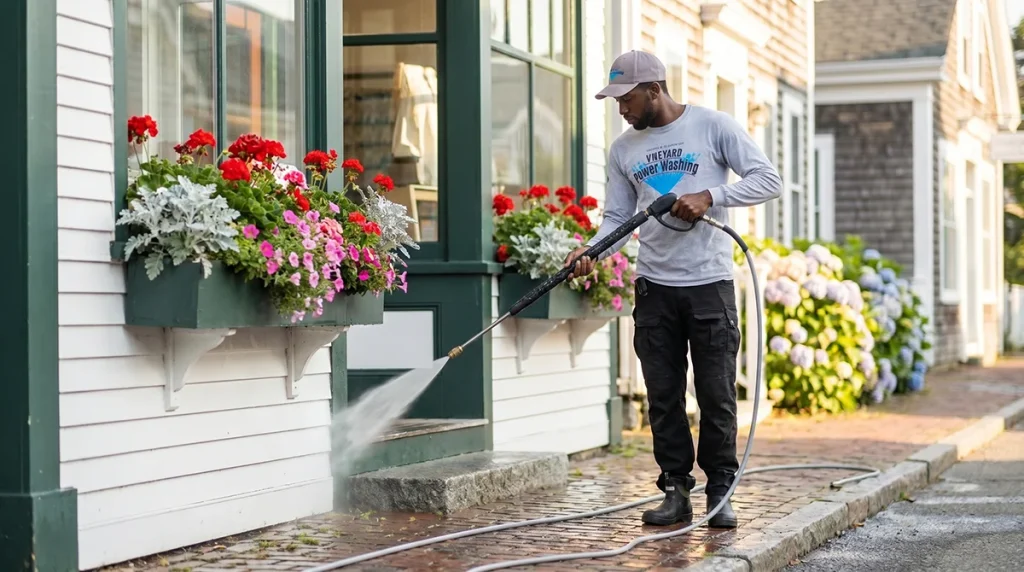
Commercial pressure washing on Martha’s Vineyard is how business owners and property managers restore that first impression after a long off-season. Winter on the Vineyard is hard on commercial exteriors. Salt air, biological growth, and months of shoulder-season moisture leave facades looking tired by the time the season opens. A professional exterior clean changes that in a single visit.
Vineyard Power Washing has cleaned commercial properties across all six island towns for over 45 years. Our approach is built around the Vineyard’s specific conditions: historic building materials, coastal environmental standards, and a peak season that compresses your entire year’s revenue into twelve weeks. This guide explains how professional commercial exterior cleaning works on the island and why booking before summer opens is the right time to act.
What Accumulates on Martha’s Vineyard Commercial Exteriors Over Winter?
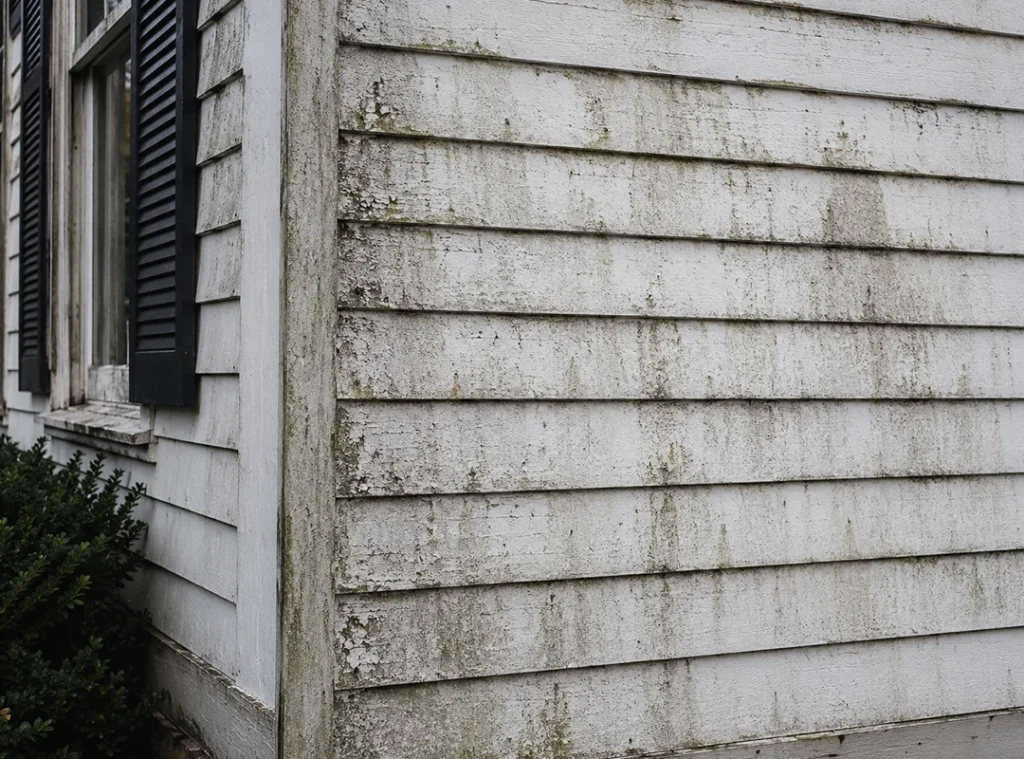
Martha’s Vineyard commercial buildings accumulate salt haze, biological growth (algae, lichen, and moss), exhaust residue, and organic debris over the fall and winter months. Coastal salt air deposits crystallize on facades, and the island’s damp shoulder season feeds rapid growth on exterior surfaces that stay in shade through the cold months.
Coastal properties face continuous salt deposition from the surrounding Atlantic, and by the time spring arrives, the residue that accumulated through December and January has already had months to work against paint seals, grout, and exterior hardware. For most coastal commercial properties, the professional recommendation is cleaning at minimum twice a year: once in spring to remove winter salt buildup, and once in fall to prepare surfaces for off-season conditions.
For restaurants and dining establishments, the challenge compounds. Grease vapor from kitchen exhaust settles on patio surfaces and exterior wall sections near service entrances. Gum and organic debris concentrate at entryways. On a busy summer street, those accumulations are visible to every person who walks past your door.
Biological growth is the other major factor. Algae and lichen thrive on coastal facades through the damp shoulder season, and warm, humid summers accelerate regrowth on north- and east-facing walls that stay shaded longest. By June, an untreated storefront can carry a visible green or dark haze that casual cleaning doesn’t remove.
Why High-Pressure Washing Can Damage Edgartown’s Historic Storefronts
High-pressure washing at 1,300 to 3,100 PSI damages the mortar, painted wood, and delicate masonry found in Edgartown’s historic buildings. The right method for most Martha’s Vineyard commercial exteriors is soft washing: low-pressure application (under 500 PSI) combined with professional-grade biodegradable solutions that kill biological growth at the root rather than simply rinsing the surface.
Edgartown’s historic district, established in 1987, encompasses 286 properties. Most of the storefronts along Main, North Water, Dock, and Winter Streets date from the 19th-century whaling era. The mortar used in that construction is significantly softer than modern mortar, and the painted clapboard and wood trim common throughout the district cannot withstand the PSI levels that work safely on concrete or modern composite siding.
Soft washing uses biodegradable cleaning solutions applied at low pressure. The detergent blend penetrates biofilm, dissolves salt residue, and loosens grime from the surface. After a dwell period of five to ten minutes, a gentle rinse carries the loosened material away. The dwell time is what makes soft washing more effective than pressure blasting: it kills algae and lichen at the root, which means results last significantly longer and surfaces don’t regreen within weeks.
Surface by Surface: The Right Approach for Your Building Type
One-size-fits-all thinking creates problems on commercial jobs. The storefronts, restaurants, and hospitality venues on Martha’s Vineyard span a wide range of exterior materials, and the correct cleaning method depends on what you’re working with.
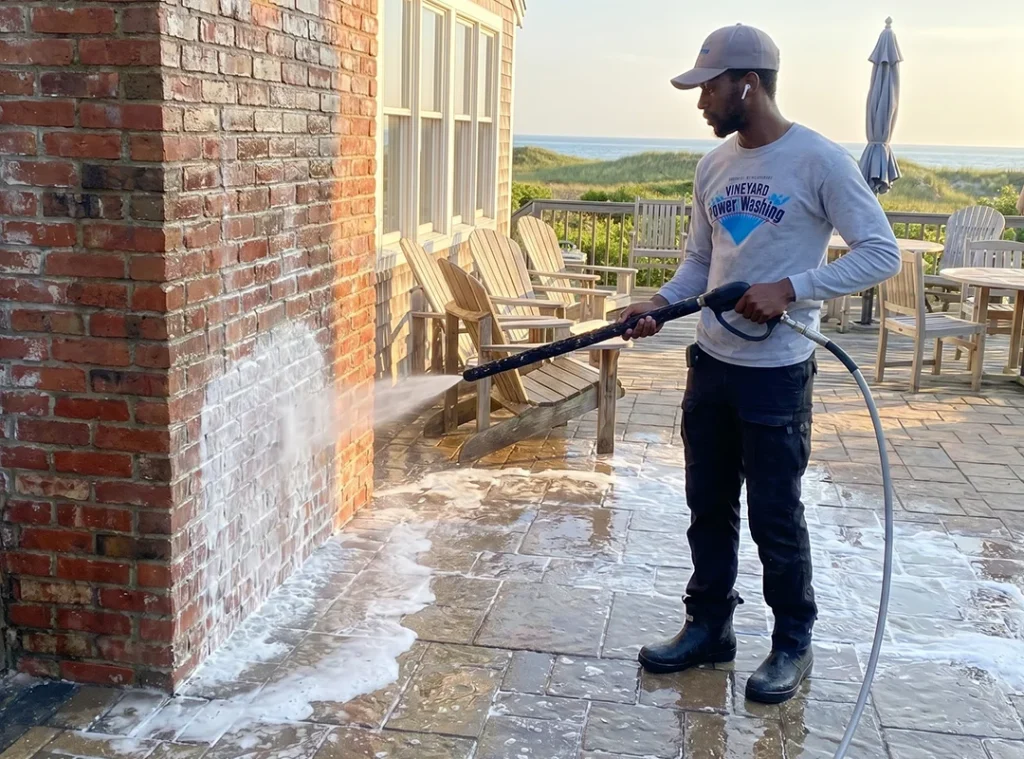
Brick facades and historic masonry require the lowest pressure and the most deliberate chemistry. Specialized biodegradable solutions formulated for historic masonry are the appropriate choice for these surfaces: they penetrate biological growth and mineral deposits without eroding soft mortar or staining the stone face.
Painted wood storefronts and white clapboard are the most common commercial exterior type in Edgartown and Vineyard Haven. These surfaces cannot tolerate high pressure. Soft wash with a wide-angle fan tip at controlled pressure removes biological haze, salt residue, and surface oxidation without lifting or feathering the paint.
EIFS (exterior insulation and finish systems) and stucco are found on newer commercial buildings in Oak Bluffs and Vineyard Haven. Soft washing is the correct method for these finishes as well: detergent penetrates the micro-cracks where algae hide, and the low-pressure rinse lifts contamination without etching or streaking the surface.
Restaurant patio pavers and sidewalk surfaces near dining establishments typically carry food residue, gum, and biological growth deep in the joint lines. Professional paver and stone cleaning uses controlled surface techniques appropriate to the material: bluestone, brick, and natural stone each call for a different approach.
Commercial parking areas and business entry driveways benefit from professional driveway cleaning that removes oil stains, tire marks, and the surface algae common to shaded concrete in the Vineyard’s coastal climate.
Why July 4 Should Be Your Cleaning Deadline
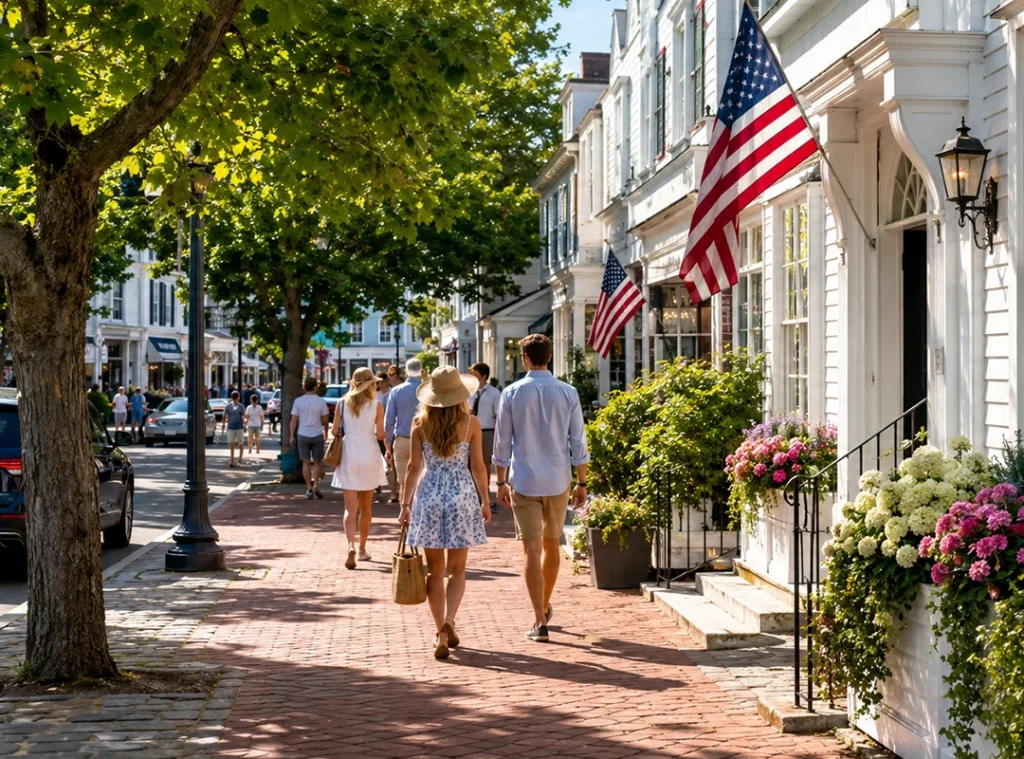
Martha’s Vineyard’s year-round population sits around 15,000 to 20,000 residents. In peak summer, that number surges past 200,000 visitors. That context shapes every business decision you make before June ends.
The visitor wave begins building well before July. A Taste of the Vineyard on June 11, hosted at the Dr. Daniel Fisher House in Edgartown, brings over 100 food and beverage vendors and draws a concentrated crowd of guests who are actively choosing where to eat and spend their summer season. Vineyard Artisans Summer Festivals begin June 14, running Sundays through September and drawing visitors island-wide each week. By the time the July 4 fireworks go up over Edgartown harbor, your exterior has already been evaluated by thousands of potential customers.
Research on commercial curb appeal consistently shows that more than two-thirds of consumers have decided not to visit a business based on its exterior appearance alone. On an island where visitors are choosing between dozens of comparable options within walking distance, the appearance of your building is not a cosmetic detail. It is a business variable.
Waiting until July to schedule a commercial exterior clean means cleaning after those first impressions are already set. Summer on the Vineyard is twelve weeks of concentrated foot traffic, word of mouth, and review accumulation. Cleaning before it starts is not routine maintenance. It is one of the clearest ROI decisions available before your season opens.
How Does Vineyard Power Washing Schedule Around Business Hours?
Vineyard Power Washing coordinates scheduling around your operating hours. For most commercial properties, that means early morning work before your business opens or evening appointments after closing. Equipment staging is planned to avoid customer entrances and delivery windows, so your operations stay uninterrupted on cleaning day.
This matters more on the Vineyard than it might elsewhere. Parking is limited in downtown Edgartown and Vineyard Haven, delivery windows are narrow, and your staff and customers don’t have easy alternatives if the front entry is blocked during business hours. A professional team with commercial-grade equipment and clear staging logistics gets the work done without turning your morning into a logistical problem.
For multi-building commercial properties or hospitality venues cleaning multiple exterior zones, we sequence work across the property to minimize disruption while keeping the job to a single visit. The goal is a clean exterior and a day that runs normally for your business.
How Often Should Martha’s Vineyard Commercial Properties Be Cleaned?
Martha’s Vineyard’s coastal climate means commercial exteriors accumulate salt, biological growth, and particulate residue faster than inland properties. For most storefronts and restaurants on the island, professional exterior cleaning once a year before the summer season is the minimum. High-traffic properties or venues with direct harbor or roadside exposure benefit from twice-yearly service: once before summer opens and once after the season closes in September.
Coastal properties in humid marine climates typically need cleaning every six to twelve months, compared to the two-to-three-year cycles that work for drier inland climates. On Martha’s Vineyard, where salt air deposition is year-round and summer humidity is high, the six-to-twelve-month schedule is the appropriate baseline for most commercial properties.
For restaurants and patio-heavy hospitality venues, a second clean in September removes organic residue and biological growth that accumulates through peak activity months. It also protects surfaces through the off-season and makes the following spring clean faster and less expensive.
Protecting your building exterior is a long-term financial decision as well as a seasonal one. Professional soft washing extends the life of paint finishes, prevents mortar degradation in historic masonry, and removes biological growth before it causes surface staining and structural breakdown. The cost of annual cleaning is a fraction of a repaint or masonry repair.
Martha’s Vineyard’s peak season is the most commercially concentrated window most island businesses experience all year. The appearance of your exterior, your storefront, your patio, your entry, is part of what drives customers in and keeps them coming back.
Vineyard Power Washing has worked with storefronts, restaurants, hotels, and commercial property owners across all six Vineyard towns for more than 45 years. Our commercial pressure washing service is designed for the island’s building types, environmental standards, and operational realities. We use biodegradable soft-wash solutions, schedule around your hours, and treat historic and sensitive materials with the care they require.
Summer scheduling fills fast. If you want your property clean before the July 4 rush, the time to book is now. Request a commercial exterior cleaning quote for your Martha’s Vineyard property today.
Frequently Asked Questions
What is commercial pressure washing on Martha’s Vineyard?
Commercial pressure washing on Martha’s Vineyard is a professional exterior cleaning service for storefronts, restaurants, hotels, and commercial buildings. Vineyard Power Washing uses soft-wash techniques, applying biodegradable cleaning solutions at low pressure (under 500 PSI) to safely clean historic and coastal commercial exteriors without damaging sensitive building materials.
How much does commercial exterior cleaning cost on Martha’s Vineyard?
The cost of commercial exterior cleaning depends on the building size, surface types, contamination level, and whether the job includes multiple areas such as facades, patio pavers, and parking surfaces. Vineyard Power Washing provides customized quotes for each commercial property. Contact us directly for an accurate estimate based on your specific building.
Does soft washing work on Edgartown’s historic brick and wood storefronts?
Yes. Soft washing is specifically recommended for historic masonry, brick, and painted wood surfaces. It uses low water pressure (150 to 500 PSI) combined with professional-grade biodegradable solutions to remove biological growth, salt residue, and staining without eroding mortar, lifting paint, or damaging the materials common in Edgartown’s 19th-century commercial buildings.
How long does a commercial exterior cleaning job take?
The time required depends on the size and complexity of the property. A single storefront facade typically takes one to two hours. Larger commercial properties, multi-building sites, or jobs that include patio pavers, sidewalks, and parking areas take longer and are usually scheduled as a half- or full-day window. Most commercial jobs can be completed without disrupting normal business hours.
Is commercial exterior cleaning safe near Martha’s Vineyard’s harbor and coastal waterways?
Yes, when performed by a licensed and experienced contractor using biodegradable cleaning solutions. Vineyard Power Washing uses professional-grade soft-wash chemistry formulated to be safe for the island’s coastal environment, including harbor-adjacent commercial properties in Edgartown and Oak Bluffs. We comply with Massachusetts coastal environmental standards on every commercial job.