
Keeping a coastal home clean is different from cleaning a home inland. Sea air, ferry dust, pine pollen, and frequent fog leave stubborn films that invite mold, algae, and lichen. This guide explains how to plan safe house washing on Martha’s Vineyard, what methods work best for cedar shingles and other materials, how often to schedule cleanings, and how local conditions around Vineyard Haven, Oak Bluffs, Edgartown, West Tisbury, Chilmark, and Aquinnah affect your routine.
Why coastal homes need a different washing plan
Salt crystals draw moisture, which keeps siding damp longer. Add shade from oaks and pines and you get ideal conditions for green and black growth. In summer, pollen sticks to salt film and bakes in the sun. In winter, wind drives sand and fine debris against exteriors. Without a routine wash, stains set into wood grain, paint loses its sheen, and caulking ages faster.
Benefits of a proper wash plan:
- Stops algae and mildew before they root into wood fibers
- Extends the life of cedar shingles, paint, and trim
- Improves indoor air quality by reducing spore sources near vents and windows
- Boosts curb appeal and property value
Soft washing vs power washing on cedar shingles
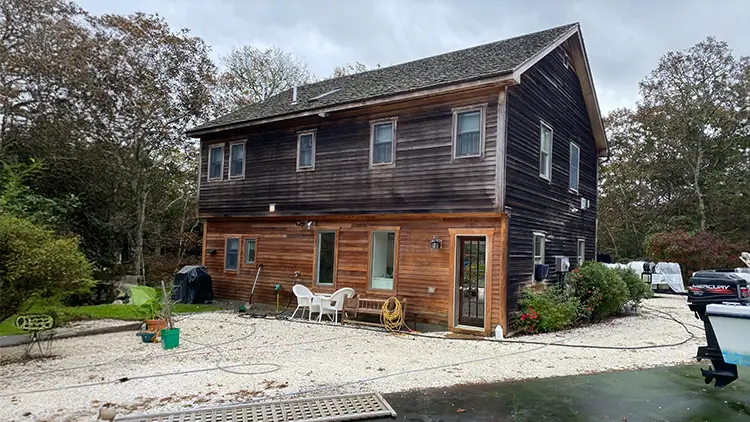
Cedar shingles are beautiful but sensitive. High pressure can raise the grain, cut the soft spring wood, and shorten the life of the shingle.
Best practice for cedar shingles:
- Soft washing with low pressure and a biodegradable detergent that lifts organic growth
- Gentle rinse to protect the gray patina many Vineyard homeowners prefer
- Spot brushing for stubborn lichen, then a low pressure rinse
Where higher pressure can be used carefully:
- Painted trim and PVC when sound and well adhered
- Masonry like foundations or hardscape, still with controlled settings and fan tips
- Never on window screens, loose paint, or cracked stucco
Materials and methods by surface
Cedar shingles
- Low pressure soft wash
- Rinse from bottom to top in short passes to avoid streaking, then final top down rinse
- Avoid brighteners unless you plan a full restoration
Painted clapboard, fiber cement, PVC trim
- Low to moderate pressure with a wide fan tip
- Detergent dwell time of a few minutes, then rinse before it dries
Stucco, EIFS, and older mortar
- Soft wash only
- Keep water angles shallow to avoid driving moisture into hairline cracks
Windows and doors
- Rinse cool glass first
- Use neutral soap on sills to avoid drying out seals
What about the roof?
For roof stains, use a dedicated roof soft wash. The technique and chemistry differ from siding. A roof cleaning should be handled as a separate service to protect shingles and landscaping.
How often to wash in each town
Local microclimates matter. Use these Vineyard specific guidelines.
- Vineyard Haven and Oak Bluffs: More traffic and ferry dust. Plan a light maintenance wash every 9 to 12 months.
- Edgartown: Sea breeze and sun help drying but salt is constant near the harbor. Schedule every 12 months, with shaded sides spot cleaned mid season.
- West Tisbury and Chilmark: Heavier tree cover leads to shade and slow drying. Plan every 9 to 10 months, watch the north and east faces.
- Aquinnah: High exposure to wind and fog on the cliffs. A full wash every 12 months with a spring salt rinse after stormy winters.
Seasonal timing tips:
- Late spring: Clear pollen film and winter salt so surfaces breathe in summer.
- Early fall: Remove mildew before storm season to keep stains from setting over winter.
Signs your home is ready for a wash
- Green shadowing under windowsills or drip lines
- Black streaks that reappear a few days after rain
- Gray cedar that looks blotchy rather than evenly weathered
- Gritty feel on paint from salt and sand
- Musty smell near shaded sides or entryways
Detergents and landscaping safety
A quality soft wash uses biodegradable surfactants that target organic growth. Protection steps include:
- Pre wetting nearby plantings so leaves do not absorb solution
- Bagging downspouts if roof wash is nearby
- Low concentration application with short dwell times
- Final freshwater rinse of beds, walkways, and hardware
These steps keep shrubs, lawns, and coastal plantings safe while achieving a deep clean.
DIY or hire a pro
You can rinse light dust yourself, but a full soft wash needs the correct tips, low PSI, calibrated mix, and safe ladders.
Hire a professional when:
- You have cedar shingles or historic trim
- There is visible lichen or black algae
- Upper stories or steep grades make access tricky
- You want plant protection and proper wastewater control
A simple annual house washing plan
- Spring inspection: Walk around after the last hard frost. Photograph problem areas.
- Service booking: Aim for a dry 2 to 3 day weather window.
- Pre service prep: Close windows, move furniture, and note any leaks or caulk gaps.
- Soft wash day: Low pressure application and controlled rinse, starting with the most shaded sides.
- Post rinse check: Verify even color on cedar, clean sills, and clear weep holes.
- Follow up: Note areas that need mid season touch ups and schedule next year’s clean.
Town by town quick tips
- Vineyard Haven: Focus on street facing sides where ferry dust collects.
- Oak Bluffs: Salt plus pine pollen near parks calls for a thorough spring wash.
- Edgartown: Harborside homes need gentle but regular rinses to preserve shine on painted trim.
- West Tisbury: Shade management is key. Consider light pruning to improve airflow.
- Chilmark: Wind driven sand can scuff paint. Use soft brushes and wide fan tips only.
- Aquinnah: Cliff exposure means fine salt coats. Rinse hardware and hinges to prevent corrosion.
Frequently asked questions
Will soft washing remove the natural gray color from cedar
No. A correct soft wash removes organic growth and surface film while leaving the weathered gray patina. Brighteners and sanding are only used during restorations.
How long does a house wash take
Most single family homes are completed the same day. Larger or shaded homes with heavy growth can take longer due to extra dwell time and detailing.
What if rain is in the forecast
Light rain is fine. Heavy downpours or high wind reduce dwell time and rinse control, so a reputable crew will reschedule for quality and safety.
Is the process safe for pets and gardens
Yes, when plant protection, low concentration mixes, and thorough rinsing are used. Keep pets indoors during the wash and until surfaces are dry.
Ready to schedule house washing on Martha’s Vineyard
Bring back a clean, even finish without damaging your siding. Request a free quote for soft washing anywhere on Martha’s Vineyard, including Vineyard Haven, Oak Bluffs, Edgartown, West Tisbury, Chilmark, and Aquinnah.
Call: +1 508 560 8186
Website: Request a quote
Learn more about the House Washing Service