
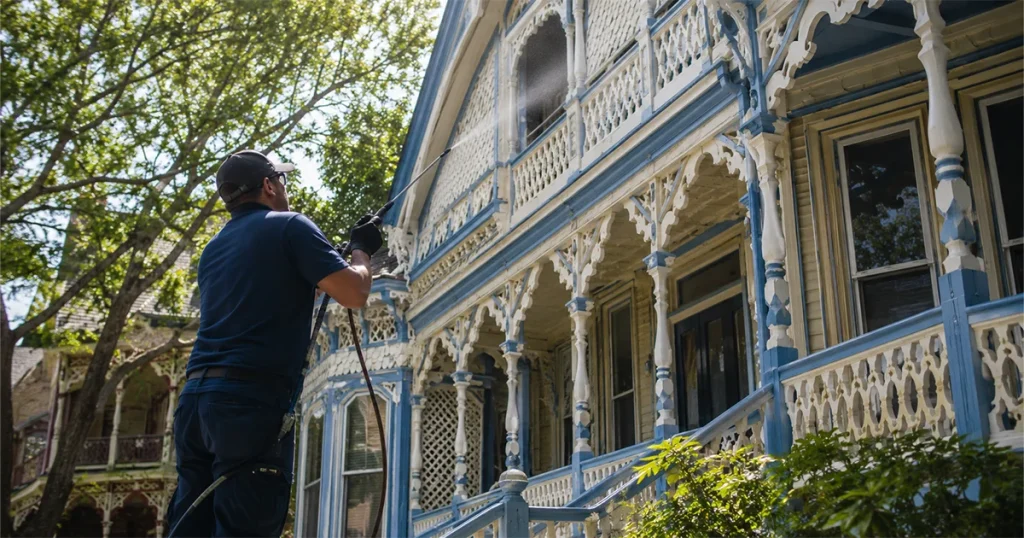
TL;DR: The 300+ gingerbread cottages in Oak Bluffs sit inside a National Historic Landmark district on 36 acres. Cleaning them safely requires soft washing at under 100 PSI with biodegradable solutions. Standard pressure washing at 2,000 to 3,000 PSI strips paint, damages fretwork, and forces water behind Victorian-era boards. This guide covers what accumulates on cottage facades, why high-pressure washing is dangerous on carpenter gothic woodwork, and when to schedule a professional cleaning.
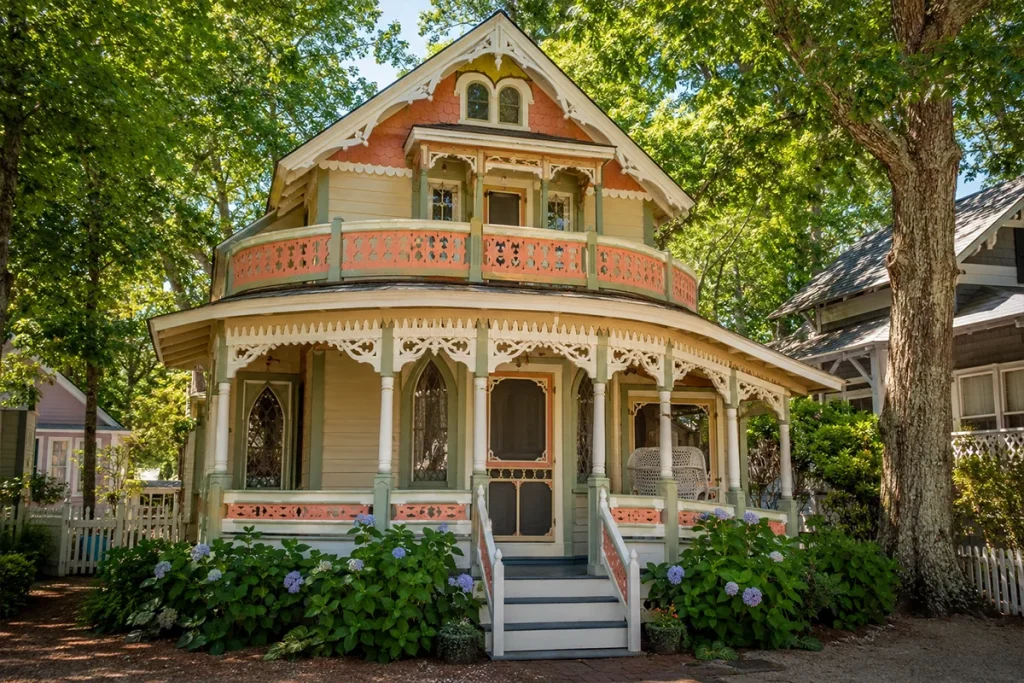
More than 300 gingerbread cottages stand on 36 acres in Oak Bluffs inside the Martha’s Vineyard Camp Meeting Association district, a National Historic Landmark that began as Methodist camp meetings in 1835. The carpenter gothic facades with their painted lattice, pointed-arch windows, and elaborate fretwork trim have defined this corner of Martha’s Vineyard for more than 160 years. They are the most photographed architecture on the island.
If you own one of these cottages, the exterior is rarely out of public view. It is also rarely out of the elements. Martha’s Vineyard’s summer relative humidity regularly reaches 70 to 80 percent, and the dense campground layout creates pockets between buildings where moisture accumulates against painted surfaces through the entire season.
Cleaning these surfaces safely is a different task from washing modern vinyl siding or even most historic clapboard homes. The methods that work on other house types can strip a century of paint from a cottage facade in minutes, force moisture behind boards that have no modern barrier behind them, and crack ornamental fretwork that cannot be replaced. Vineyard Power Washing has served Martha’s Vineyard properties since 1978. This is what every Oak Bluffs cottage owner should know before scheduling an exterior cleaning.
The Architecture That Makes Oak Bluffs Cottages Unique
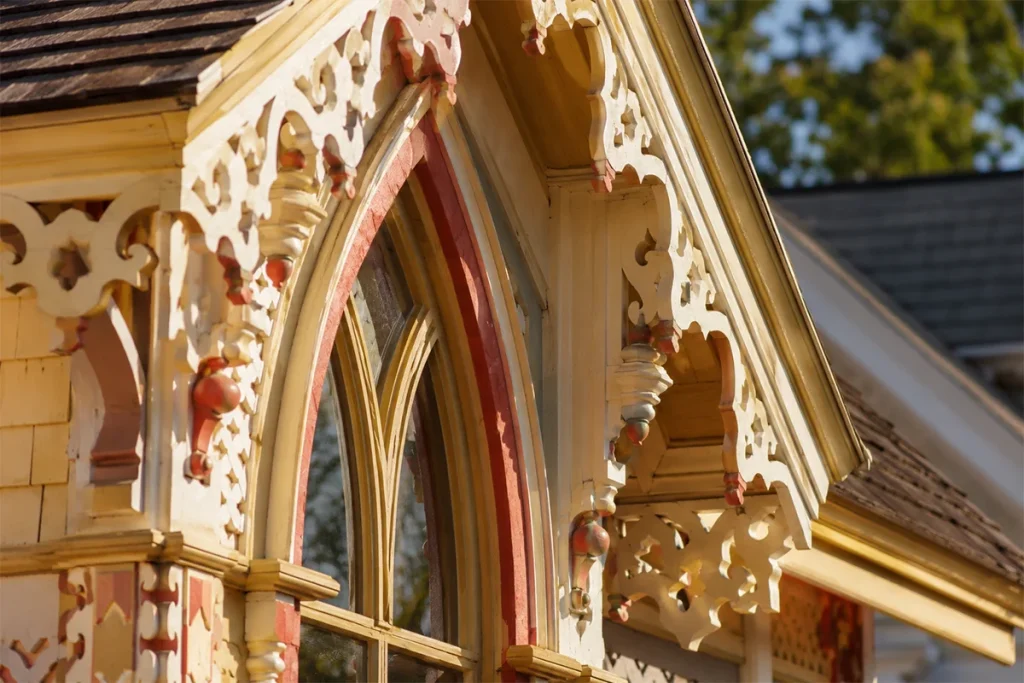
The MVCMA campground began as a Methodist revival site in 1835. The first permanent wooden cottages replaced canvas tents starting in 1859, and by 1879 the grounds had a permanent centerpiece: the Tabernacle, a cast and wrought iron open-air structure still standing today and recognized as the largest wrought iron structure of its kind in the United States.
The cottages that evolved from those earliest tent frames are now classified as carpenter gothic, a North American architectural style that applied Gothic Revival cathedral detailing to wooden residential structures, using the steam-powered scroll saw to produce elaborate decorative elements that earlier craftsmen could not have built by hand. The result on a cottage facade is painted lattice, decorative bargeboards, pointed-arch window frames, and the fretwork “gingerbread” trim that gives the district its name.
For property maintenance, that architectural detail means layered paint over Victorian-era dimensional lumber, ornamental joints tightly fitted between lattice and trim sections, and no modern moisture barrier behind the original wood. The MVCMA maintains strict guidelines for all exterior modifications to campground properties. Any maintenance work that damages the paint, the wood grain, or the ornamental detail creates both a preservation concern and a potential issue under those property covenants.
What Builds Up on Cottage Facades in the MVCMA?
Mildew is the dominant problem on most gingerbread cottage exteriors, driven by the campground’s density and the island’s consistently high humidity. Martha’s Vineyard summer humidity reaches 70 to 80 percent, and the close spacing of 300 cottages on 36 acres limits airflow between buildings, trapping moisture against painted surfaces for weeks at a time.
Beyond mildew, facades also accumulate salt spray from nearby Vineyard Haven Harbor and Nantucket Sound, UV bleaching that fades multi-color painted trim, and grime from thousands of visitors who walk the campground paths each summer. The combination means that even a well-maintained cottage can show visible biological growth on north-facing or shaded surfaces within a single season.
The specific concern with painted Victorian wood is that mildew does not remain only on the surface. Over time, it works beneath paint through micro-cracks in the finish. Once biological growth has established below the paint layer, surface rinsing will not remove it. A cleaning solution needs sufficient dwell time to kill the growth at the root, which is the step that separates a professional soft-wash service from a cosmetic rinse.
Can You Pressure Wash a Gingerbread Cottage?
No. Standard residential pressure washers operate at 2,000 to 3,000 PSI. That is more than enough force to strip paint from wood siding immediately, gouge the wood surface beneath it, and force water behind layered Victorian boards into the wall cavity. On ornamental fretwork and lattice, high pressure also risks cracking or shearing the woodwork outright.
The water intrusion risk is specific and serious. When high-pressure water is forced behind siding boards, rot develops inside the wall structure for months before becoming visible externally. Victorian cottages are especially exposed to this because the original lumber has no modern moisture barrier behind it, meaning water driven behind the siding has no vapor check to stop it.
There is also a regulatory consideration specific to MVCMA properties. The Association requires that safe lead paint removal practices be followed for any exterior work on campground cottages. High-pressure washing that chips or aerosolizes paint on multi-layer historic surfaces creates a lead exposure concern that goes beyond the cleaning question itself. Any company hired to clean an MVCMA property should be explicitly familiar with this requirement before work begins.
For a deeper look at the methodology, our guide on soft washing vs. pressure washing for historic homes covers the pressure thresholds and the chemistry behind why low-pressure cleaning is effective on these surfaces.
How Soft Washing Works on Victorian Painted Wood
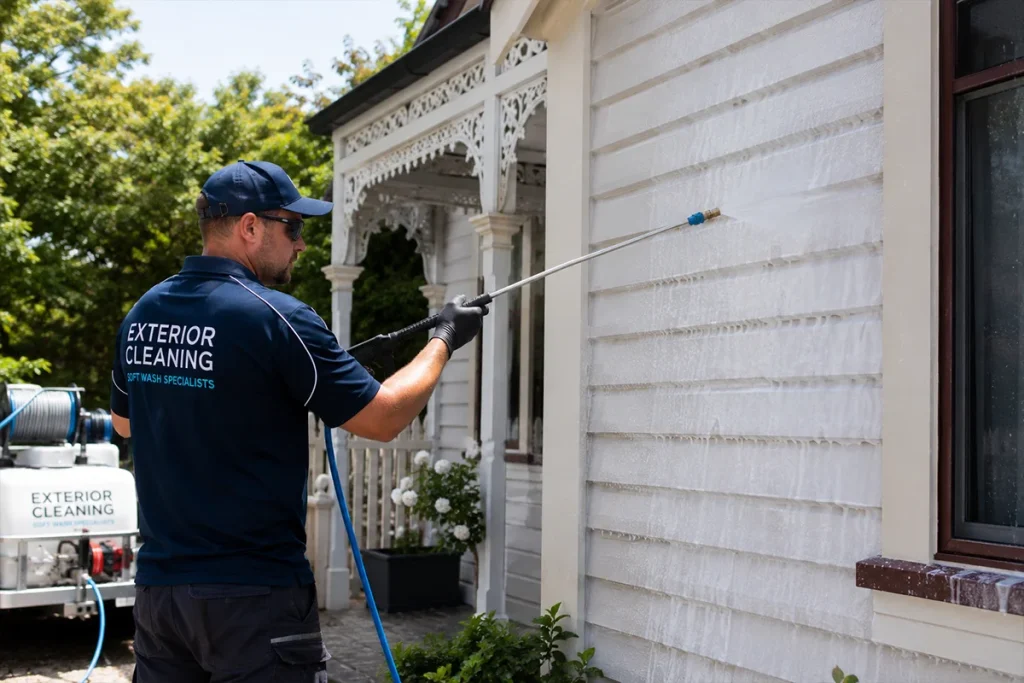
Soft washing a gingerbread cottage follows three steps. Each step has a specific purpose, and the sequence matters.
- Application. A biodegradable cleaning solution is applied at under 100 PSI to all painted surfaces. According to exterior cleaning specialists, the chemical concentration should be adjusted downward for historic painted wood compared to settings used on vinyl siding or concrete. The solution penetrates mildew, algae, and surface contamination while remaining safe for the paint bond. Application is targeted to avoid pooling at ornamental joints and lattice intersections.
- Dwell time. The solution remains on the surface for several minutes, depending on the severity of biological growth. This is the step that most homeowners underestimate. Rinsing without dwell time removes visible surface discoloration but leaves the biological root system intact. Mildew treated with adequate dwell time is killed at the source, which extends the time before re-growth returns.
- Low-pressure rinse. The surface is rinsed at a pressure well below what a standard garden hose produces at close range. This removes the solution and loosened biological matter without disturbing the paint bond or forcing moisture behind the boards. During the rinse phase, a specialist pays careful attention to fretwork joints and lattice intersections, where water angle and pressure direction matter most.
The entire process is driven by chemistry, not by mechanical force. That distinction is what makes it safe for the painted woodwork these cottages are built around.
Questions to Ask Before Hiring a Cleaning Company for Your MVCMA Property
Not every exterior cleaning company has experience with Victorian painted wood or familiarity with MVCMA campground requirements. Our Edgartown historic home cleaning guide covers similar due-diligence questions for properties in that district. For Oak Bluffs cottages, ask any company these questions before booking:
| Question | What You Are Checking |
|---|---|
| What PSI do you use on painted wood siding? | Safe soft wash for painted Victorian surfaces is under 100 PSI. Anything above 500 PSI on this type of woodwork carries real risk. |
| Do you adjust chemical concentration for historic multi-layer paint? | Solutions appropriate for vinyl siding can be too aggressive for layered historic paint finishes. |
| Are you familiar with MVCMA exterior guidelines and lead paint requirements? | Companies unfamiliar with the campground may not know the compliance considerations that apply to older cottage exteriors. |
| Do you carry liability insurance specific to historic properties? | Restoration costs for National Historic Landmark buildings are significantly higher than standard residential siding repairs. |
| Can you provide references from Victorian painted wood projects? | Experience with gingerbread cottage architecture is not the same credential as general house washing. |
Vineyard Power Washing has provided 45 years of island exterior cleaning with a specific focus on coastal and historic properties. You can read reviews from island homeowners who have worked with our team on properties across Oak Bluffs and the other five towns.
When Should You Schedule Your Gingerbread Cottage Cleaning?
Late summer and early fall, typically August through October, is the most productive window for Oak Bluffs cottage cleaning. Booking after the peak tourist season means the campground is less congested for access, and a fall cleaning removes an entire summer’s biological buildup before winter salt air exposure begins.
For most MVCMA cottages, a professional cleaning every one to two years is sufficient to prevent mildew from reaching the stage where it has begun to penetrate beneath the paint. The campground’s high-humidity environment means a two-year gap will often show visible mildew on north-facing or shaded facades by mid-season. Cottages that sit in particularly low-airflow spots between neighboring buildings may need annual attention.
If your cottage has not been cleaned in more than two seasons, or if you are seeing green or black growth on the trim and fretwork lines, schedule a professional assessment before booking. The condition of the paint below the contamination determines which approach is safest. To request a soft-wash quote for your Oak Bluffs cottage, contact Vineyard Power Washing.
The painted lattice, fretwork, and multi-color Victorian facades of the MVCMA campground are irreplaceable. Standard pressure washing can compromise them in minutes. Soft washing at under 100 PSI, with biodegradable chemistry and a proper dwell time, is the process that gets the work done without damaging the paint bond, the wood grain, or the ornamental detail that makes these cottages what they are.
Vineyard Power Washing has served Martha’s Vineyard property owners since 1978, with a focused approach on coastal and historic structures where the standard method is not the right method. To schedule a soft-wash assessment for your Oak Bluffs cottage, contact our team and request a quote. Late summer booking slots fill before the fall cleaning season, so scheduling early is worth it.
Frequently Asked Questions
Can you pressure wash a gingerbread cottage in Oak Bluffs?
No. Standard pressure washers operate at 2,000 to 3,000 PSI, which is sufficient force to strip paint from Victorian wood siding, shear ornamental fretwork, and force water behind multi-layer boards into the wall structure. Safe cleaning for carpenter gothic cottages uses soft washing at under 100 PSI, with the cleaning work performed by biodegradable chemistry at dwell rather than by water force.
How often should you clean a painted Victorian home on Martha’s Vineyard?
For gingerbread cottages in the MVCMA campground, professional cleaning every one to two years is appropriate for most properties. The campground’s combination of 70 to 80 percent average summer humidity and low airflow between tightly spaced buildings accelerates mildew growth compared to open-lot coastal homes. North-facing or heavily shaded facades may show visible biological growth within a single season.
Will cleaning remove the paint from my cottage?
Soft washing with a correctly diluted biodegradable solution and a low-pressure rinse does not disturb properly bonded paint. The risk of paint damage comes specifically from high-pressure washing, which can strip multiple paint layers in a single pass. If paint is peeling or lifting before the cleaning begins, that reflects an existing adhesion problem, not a cleaning risk. A professional assessment before booking identifies this situation.
Does the MVCMA have rules about exterior cleaning?
The MVCMA maintains guidelines for exterior modifications and requires that safe lead paint removal practices be followed for exterior work on older cottages. Cleaning companies working on campground properties should be explicitly familiar with these requirements. If you have questions about whether a planned cleaning method complies, contact the MVCMA directly at mvcma.org before scheduling the work.
What is the biggest exterior challenge for gingerbread cottages in summer?
Mildew is the primary challenge, driven by Martha’s Vineyard’s high summer humidity and the tight spacing of cottages in the campground. Salt spray from Vineyard Haven Harbor and Nantucket Sound deposits mineral residue on painted surfaces that draws further moisture into the wood. On south and west-facing facades, UV bleaching gradually fades multi-color paint between cleaning cycles, which is a separate cosmetic concern from biological growth and requires a different treatment approach.