

TL;DR: Outdoor furniture on Martha’s Vineyard weathers faster than almost anywhere on the Northeast coast. Salt air, 68–77% summer humidity, and coastal UV degrade teak, wicker, aluminum, wrought iron, resin, and marine fabrics in different ways at different rates. This guide covers the right cleaning method, the right frequency, and when to call a professional for each material. Using the wrong approach can damage furniture as fast as neglect.
The most common outdoor furniture mistake on Martha’s Vineyard isn’t skipping cleaning. It’s cleaning the wrong way for the material. Teak grain forced open by a high-pressure washer won’t seal back. Natural rattan unraveled by the wrong nozzle can’t be rewoven. Powder coat stripped off aluminum leaves bare metal exposed to the same salt air it was protecting against.
Martha’s Vineyard sits in one of the most demanding coastal environments on the East Coast. Summer relative humidity runs between 68% and 77%, sunlight reflecting off the harbor and open water amplifies UV intensity, and salt particles from the prevailing southwest wind settle on every outdoor surface. Most manufacturer care guides were written for less aggressive conditions. Understanding why coastal properties need more frequent cleaning is step one. Knowing how to clean each material correctly is step two.
Why Is Martha’s Vineyard Harder on Outdoor Furniture Than Most Coastal Properties?
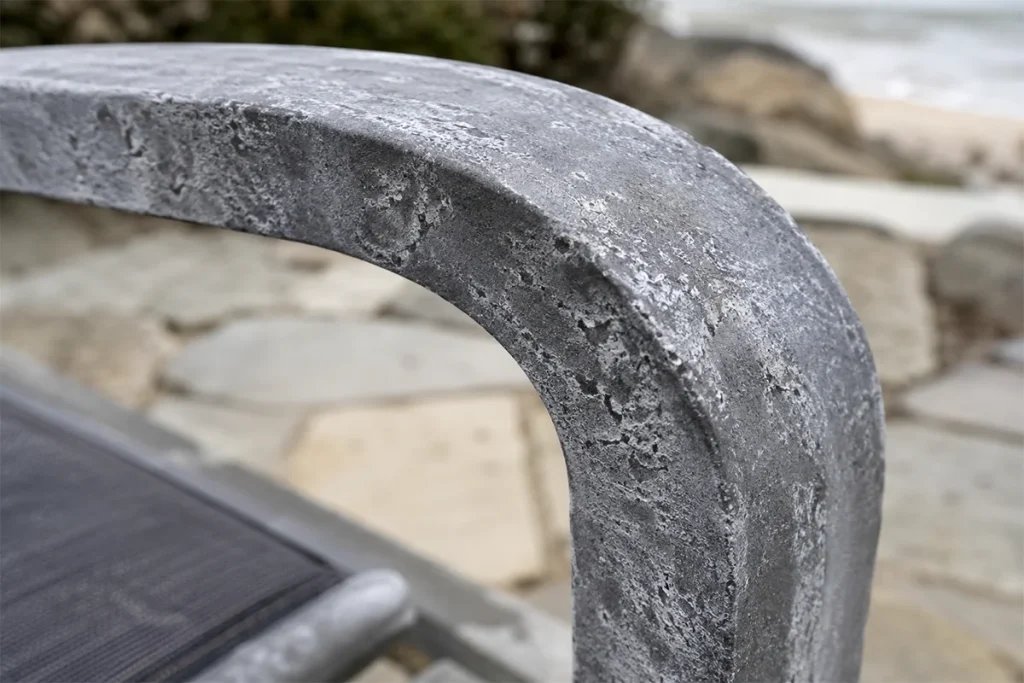
Martha’s Vineyard outdoor furniture faces a harder environment than most mainland coastal settings because salt air, high humidity, and UV exposure operate simultaneously all season long, without the relief of a predictable dry period.
Salt particles settle on surfaces and attract moisture, accelerating corrosion and biological growth in a continuous cycle. Furniture that looks clean in April can show visible rust, corrosion, and finish degradation by September on a Vineyard property. Salt air exposure extends measurably 3–5 miles inland from the shoreline depending on wind patterns, which puts properties in all six Vineyard towns within the active damage zone. The prevailing southwest Atlantic wind keeps salt concentration high through the entire summer, not just during storms or high-tide events.
Outdoor Furniture Cleaning on Martha’s Vineyard: A Material-by-Material Breakdown
Each material degrades differently in Vineyard conditions and requires a different cleaning approach. The table below gives a quick reference, with the full breakdown following.
| Material | Primary Risk in Vineyard Conditions | Cleaning Frequency | Safe Method |
|---|---|---|---|
| Teak | Surface grime, silver-gray weathering | 1–2x per year; rinse monthly | Soft brush, mild soap, low-pressure rinse |
| Wicker / Natural Rattan | Mold and mildew in woven crevices | Every 4–6 weeks in peak season | Vinegar solution, soft scrub; no pressure washer |
| Aluminum | Chalky oxidation at chips and joints | Weekly wipe-down; deep clean 2x/year | Mild soap, soft cloth, marine wax coat |
| Wrought Iron | Rust spreading from paint chips | 4x per year minimum | Rust treatment, repaint bare metal, paste wax |
| Resin / HDPE / Poly Lumber | UV fading in cheaper grades; surface grime | 2x per year; rinse frequently | Mild dish soap, soft brush, paste wax |
| Marine Fabric (Sunbrella) | Mold colonizing in fabric weave | Monthly rinse; deep clean 1–2x per year | Low-pressure rinse; bleach-soap solution for mold |
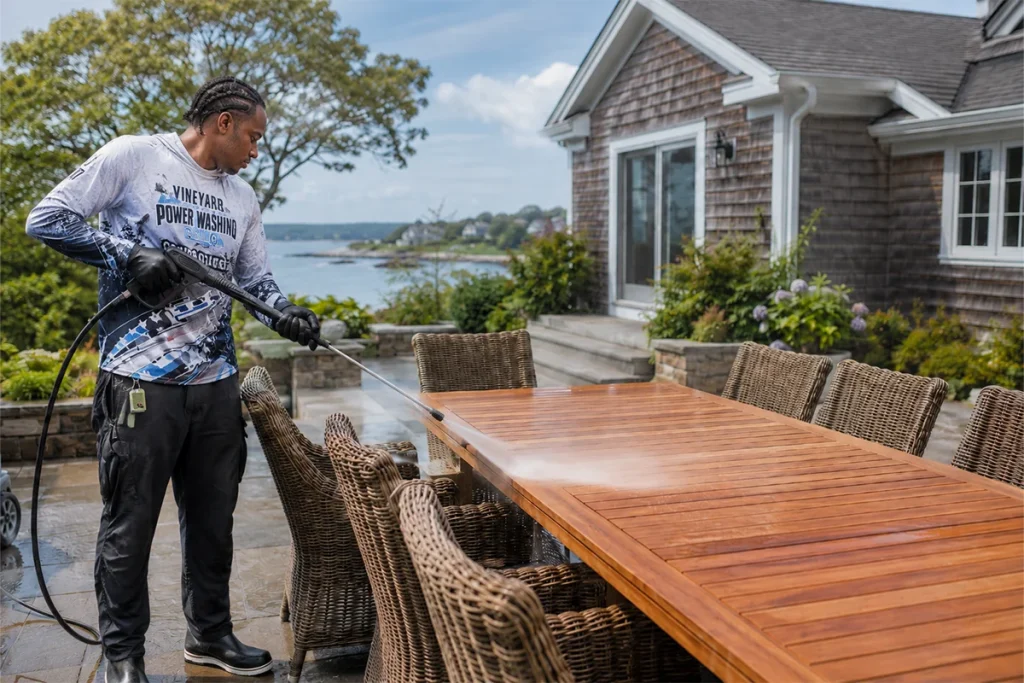
Teak. Teak’s natural oils resist moisture and insects, which is why it holds up better than most woods on Vineyard porches and decks. Left uncleaned, teak weathers from golden-brown to a silver-gray patina within one to two years, with higher UV and salt exposure moving that timeline faster. The patina is not structural damage. Biological growth underneath it is. Clean teak one to two times per year with mild soap and a soft-bristle brush, rinse monthly with fresh water to clear salt residue, and apply teak protector twice a year if you want to preserve the honey color. Do not use a pressure washer: high pressure opens the wood grain and lets moisture in where it causes rot.
Wicker and natural rattan. Natural rattan is the most vulnerable furniture material for Vineyard conditions. The woven structure that makes it breathable is also what traps moisture, and mold and mildew colonize the woven crevices where a scrub brush can’t fully reach. Clean every four to six weeks during peak season (June through September) with a vinegar-and-water solution at roughly 1-to-10 ratio on a soft brush. Rinse gently. A pressure washer at any setting loosens the weave from the core structure. Synthetic resin wicker made from HDPE performs considerably better and can tolerate a low-pressure rinse, but inspect joints after each cleaning for salt buildup.
Aluminum. Aluminum resists rust naturally, but salt air corrodes the surface at exposed joints, paint chips, or anywhere the powder-coat finish has been scratched. The visible result is chalky white oxidation. A weekly wipe-down with a damp cloth prevents salt from bonding to the surface between cleans. Twice a year, clean with mild soap, a soft brush, and a thorough rinse, then follow with a coat of marine-grade wax to seal the finish. Abrasive pads and harsh detergents strip powder coat and leave bare aluminum exposed to accelerated corrosion.
Wrought iron. Wrought iron looks best in an Edgartown garden setting and deteriorates fastest on a Vineyard property. Rust begins at any chip or scratch in the paint finish, and salt-humid conditions drive it from a pinhole to a spreading patch in a single season. Clean at least four times per year. Treat rust spots immediately with a rust converter, repaint bare metal with rust-inhibiting metal paint, and seal with paste wax. Rust left unaddressed doesn’t stay on the surface: it works through the metal to the structural core.
Resin, HDPE, and poly lumber. High-quality poly lumber from brands like POLYWOOD uses UV inhibitors fully integrated into the material during manufacturing, which holds color through many seasons. Cheaper resin sets lack adequate stabilizers and begin to fade and brittle in Vineyard conditions within 18 months. Both grades clean the same way: mild dish soap, a soft brush, and a good rinse. After cleaning, apply a thin coat of paste wax to create a moisture and UV barrier between cleans. Avoid abrasive cleaners, which aggravate brittleness in any resin.
Marine-grade fabric (Sunbrella and equivalents). Sunbrella resists mold but isn’t mold-proof. Monthly fresh-water rinsing removes the pollen, salt, and organic debris that feeds mold growth. When mold appears, Sunbrella’s care guidance recommends a solution of 1 cup bleach and 1/4 cup mild soap per gallon of water, applied with a soft brush, left for 15 minutes, then rinsed thoroughly. Use this bleach ratio only on white or very light fabrics: bleach strips color from patterned Sunbrella regardless of dilution. After each season, treat marine upholstery with Sunbrella Restore Fabric Protector to maintain water repellency.
How Often Should You Clean Outdoor Furniture on the Vineyard?
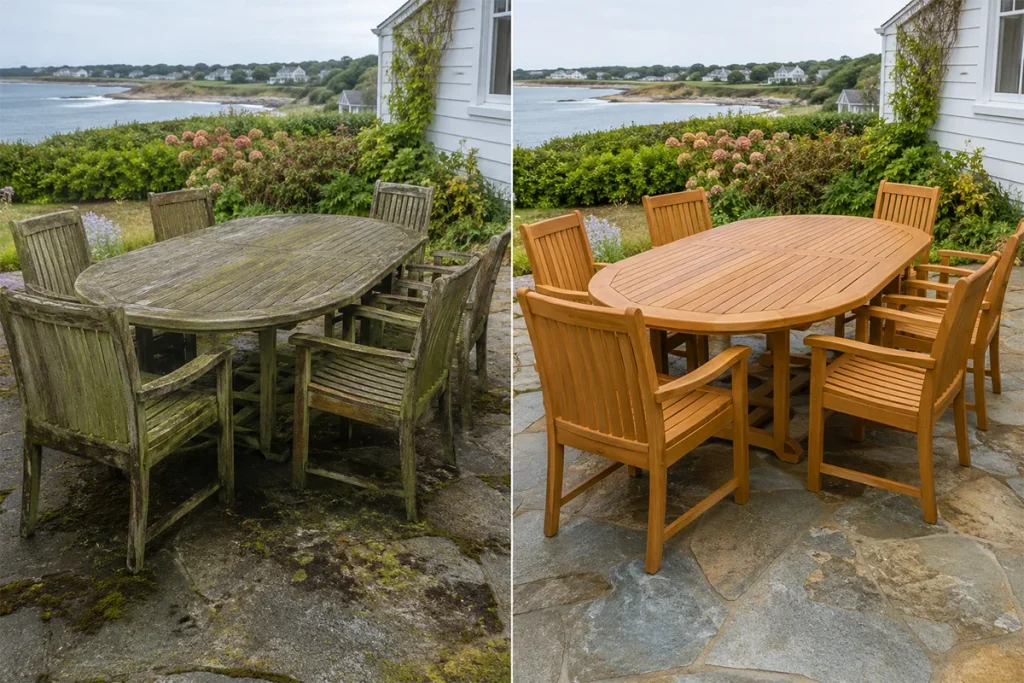
On Martha’s Vineyard, outdoor furniture needs cleaning more frequently than most manufacturer schedules recommend because Vineyard conditions are more aggressive than the mainland or inland environments those schedules assume.
A practical seasonal calendar for Vineyard properties: a full deep clean at opening in late May; fresh-water rinses monthly through peak season (June through September); a mid-season inspection in July for wicker mold and wrought iron rust; and a closing clean before covering or storing in late October. That closing clean matters. Biological growth continues under furniture covers in warm fall conditions and causes additional damage through the off-season.
The single highest-impact habit is the monthly rinse. It prevents salt from bonding to surfaces between deep cleans and removes the organic material that feeds mold growth. Properties within a half-mile of the harbor or ocean should rinse weekly during peak season rather than monthly.
Why Does Soft Washing Outperform Pressure Washing on Most Furniture Materials?
For outdoor furniture on Martha’s Vineyard, soft washing outperforms pressure washing because it kills biological growth at the root rather than just moving it across the surface.
Soft washing applies solution at low pressure, roughly equivalent to a garden hose, paired with a biodegradable cleaner that dwells on the surface before rinsing. That dwell time is what eliminates algae, mold, and mildew at the cellular level. A rinse alone moves surface grime but leaves the biological structure intact: regrowth appears within weeks in peak summer conditions. After a soft-wash treatment, regrowth takes months rather than weeks.
The pressure difference also matters for the furniture itself. Pressure washing at 1,500 PSI or higher opens teak grain, forces water behind wicker weave, chips aluminum powder coat, and cracks cheaper resin at stress points. None of those risks apply at soft-wash pressure.
Which Furniture Pieces Need Professional Cleaning and Which Can You Handle Yourself?
Some materials tolerate a confident DIY approach. Others need a professional, either because of fragility or because biological growth has penetrated deep enough that a surface scrub won’t reach it.
Manageable with the right technique at home: Aluminum frames (weekly wipe-down and mild soap deep clean); quality resin or poly lumber (dish soap and soft brush); Sunbrella cushions (monthly rinse and manufacturer-guided mold treatment).
Professional soft washing recommended: Natural rattan and wicker with visible mold in the joints; teak with biological growth under the silver-gray patina; wrought iron with rust spreading from paint chips; any high-value piece where one wrong pressure setting causes irreversible damage.
Vineyard Power Washing’s outdoor furniture cleaning service uses biodegradable solutions calibrated to each material. For properties where deck and fence cleaning also needs attention, both surfaces can be handled in a single visit. Because cleaning solution runoff from furniture can mark stone and brick below, properties with patio entertaining areas often combine furniture cleaning with paver and stone cleaning in the same appointment to avoid cross-contamination.
Outdoor furniture on Martha’s Vineyard doesn’t fail because it was a poor purchase. It fails because Vineyard salt air, summer humidity, and coastal UV require a more specific and more frequent maintenance approach than most property owners expect. The right method for each material, and a cleaning schedule calibrated to island conditions, is what separates furniture that looks good for 20 seasons from furniture that deteriorates by the third. Vineyard Power Washing has been cleaning exterior surfaces on all six island towns since 1978. Contact us to request a professional outdoor furniture cleaning quote before peak summer guest season.
Frequently Asked Questions
Can I use a pressure washer on outdoor furniture on Martha’s Vineyard?
Most outdoor furniture materials should not be cleaned with a standard pressure washer. Residential pressure washers typically operate at 1,500 to 4,000 PSI, enough to force water into teak grain, unravel wicker weave, chip aluminum powder coat, and crack cheaper resin at joints. Soft washing applies garden-hose-level pressure with a biodegradable solution that kills biological growth at the root rather than just moving it. For most Vineyard furniture, soft washing is both safer and more effective than a pressure washer.
How do I know if my outdoor furniture has salt damage that needs professional attention?
Signs include chalky white oxidation on aluminum frames, rust spreading from paint chips on wrought iron, dark mildew in wicker crevices that doesn’t respond to scrubbing, mold embedded in marine fabric rather than just on the surface, and green or black spotting on teak with an otherwise silver-gray tone. Surface staining that doesn’t respond to mild soap scrubbing usually indicates that growth has penetrated the material rather than sitting on it.
Is Sunbrella fabric mold-proof?
Sunbrella fabrics are mold-resistant, not mold-proof. According to Sunbrella, mold and mildew develop when the fabric is stored wet, left in prolonged high-humidity conditions, or when organic debris like pollen or bird droppings sits on the surface. Monthly rinsing removes the organic material that feeds mold growth and prevents surface buildup from progressing to deep staining that requires bleach treatment to address.
What is the most durable outdoor furniture material for waterfront Vineyard properties?
Teak, powder-coated aluminum, and HDPE poly lumber (such as POLYWOOD) are the three strongest choices for waterfront Martha’s Vineyard properties. Teak resists moisture and insects naturally but requires seasonal cleaning and optional protective sealing. Powder-coated aluminum resists rust when its finish is maintained. HDPE poly lumber requires the least maintenance of the three: it doesn’t absorb moisture, doesn’t corrode, and its UV inhibitors are built into the material rather than applied as a coating. For high-turnover vacation rental properties, poly lumber is the most practical long-term choice.
Does outdoor furniture cleaning affect the patio and paver surfaces around it?
Yes. Cleaning solution and runoff from furniture can leave marks on stone, brick, and paver surfaces below, particularly when mold-treatment agents are part of the clean. Professional cleaning accounts for this by managing runoff during the service visit. For properties with stone patios or paver entertaining areas, combining furniture cleaning with paver and stone cleaning in a single appointment prevents cross-contamination and is more efficient than two separate visits.