
TL;DR: Edgartown’s historic homes, many dating to the whaling era of the 1830s through 1860s, need a different cleaning approach than a modern coastal property. Original clapboard, cedar shingles, hand-painted trim, and old mortar can be permanently damaged by high-pressure washing. Soft washing with biodegradable solutions and a proper dwell time cleans without forcing water behind materials. This guide covers what makes Edgartown’s housing stock unique, why pressure washing fails here, and what a preservation-safe cleaning actually involves.
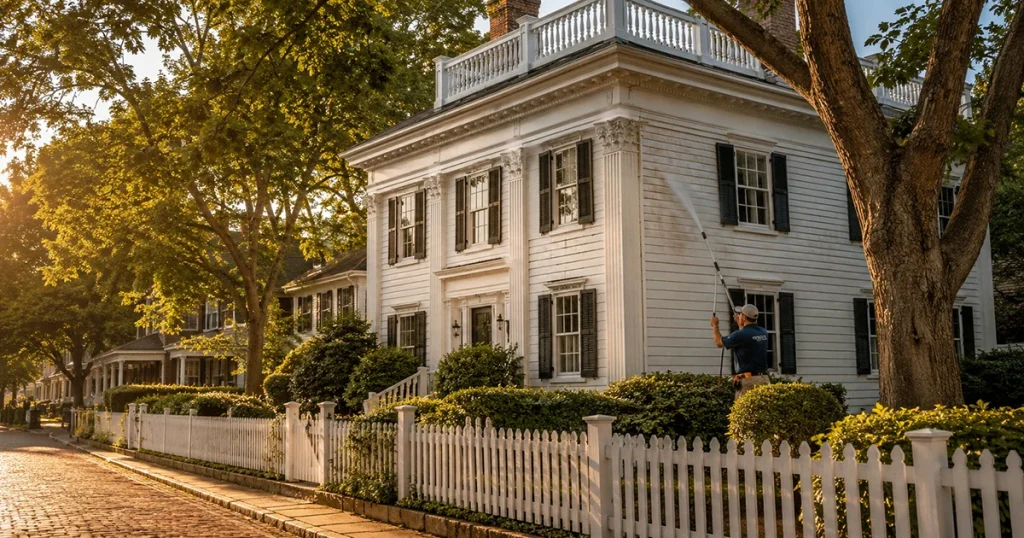
Walk down North Water Street in Edgartown and you’re looking at roughly 180 years of weather sitting in the clapboard. These whaling captains’ homes survived nor’easters, salt spray, and a century and a half of New England winters. They were not built to survive a rented pressure washer set to 3,000 PSI. We’ve cleaned thousands of properties across Martha’s Vineyard’s six towns over 45-plus years, and Edgartown’s historic district asks more of a cleaning crew than almost anywhere else on the island. The materials are older. The stakes are higher. And the wrong method can undo in one afternoon what survived a century of storms. This guide walks through what makes these homes different, why standard pressure washing puts them at risk, and what a soft-wash approach actually does instead.
What Makes Edgartown’s Historic Homes Different From Other Martha’s Vineyard Properties?
Edgartown has the highest concentration of pre-Civil War homes on the island, with roughly 676 buildings across about 500 acres listed on the National Register of Historic Places since 1983. Most other Vineyard properties, even older ones in Vineyard Haven or West Tisbury, don’t carry this density of original 19th-century material in one walkable village.
That density changes everything about how a property should be cleaned. A 1990s-built home in Chilmark can tolerate methods that would strip paint, force water behind siding, or etch old mortar on a Federal-era Edgartown house. The Vineyard Preservation Trust has spent 50 years protecting these structures because once original material is gone, it’s gone. A cleaning crew working in Edgartown needs to know the difference between a house that can take a stronger approach and one that can’t.
What Architectural Eras Are You Actually Cleaning?
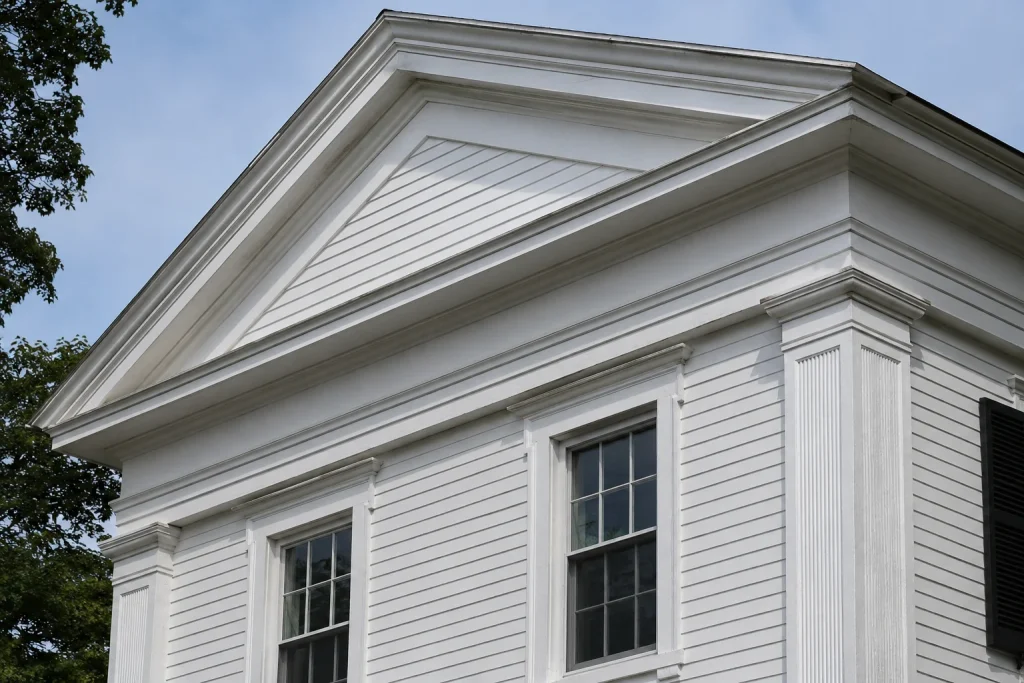
Edgartown’s historic stock breaks into four distinct periods, and each one comes with its own materials and vulnerabilities. First Period Colonial homes (1650s to 1775) tend to have the oldest, thinnest original clapboard still on the wall. Late Georgian and Federal-style homes (1775 to 1835) bring narrow clapboard, elongated windows, and decorative entries with fanlights, details that are easy to damage with abrasive cleaning.
Greek Revival is the style most people picture when they think of Edgartown: roughly 125 houses in the district, built during the whaling boom between 1830 and 1865, with pedimented gables, wide cornices, and the widow’s walks captains’ wives used to watch for returning ships. Victorian-era homes (1850 to 1900) round out the district with more ornamental trim and varied siding profiles.
Cedar shingle siding shows up across several of these eras and ages in its own way on Martha’s Vineyard, developing the gray patina homeowners want to protect rather than strip away. Our cedar shingle soft-washing guide covers that process in more depth. The point for any Edgartown owner: know which era your home falls into, because that tells you which materials are actually on your walls.
Why Is Pressure Washing Risky on a 19th-Century Edgartown Home?
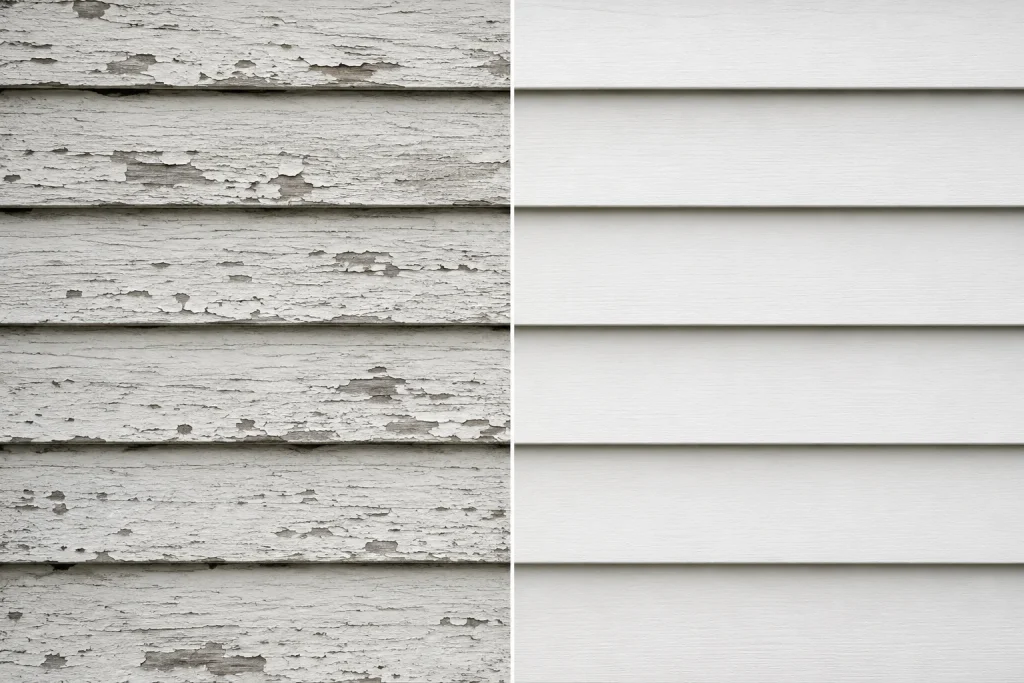
High-pressure water forces moisture behind old clapboard and through loose mortar joints, where it can sit for weeks and cause paint failure, mold, or wood decay. The National Park Service’s own preservation guidance calls high pressure “very abrasive” and warns it can etch soft stone and damage historic wood and masonry.
Here’s what that looks like surface by surface on a typical Edgartown property:
| Surface | What High Pressure Does | What It Should Do Instead |
|---|---|---|
| Original clapboard | Strips the lignin between wood grain, leaving a “washboard” texture; drives water behind boards | Low-pressure rinse after a gentle chemical dwell |
| Cedar shingles | Splinters aged fibers, removes protective patina, opens the surface to faster future growth | Soft wash that lifts growth without abrading wood |
| Granite foundations | Can drive water into old mortar joints, accelerating erosion | Low-pressure wash, brush agitation only where needed |
| Brick and old mortar | Etches soft brick face, weakens already-degraded mortar | Gentlest effective method per NPS Preservation Brief 1 |
| Hand-painted trim | Lifts and chips paint that may already be decades old | Spot-safe rinse, no direct high-pressure contact |
Pressure washing an old home can push so much moisture into the wood that a crew needs two weeks of drying time before any repainting, and paint applied over wood that’s still too wet will fail almost immediately, according to preservation guidance from the Wisconsin Historical Society. On a house where the original siding is the asset you’re trying to protect, that’s not a risk worth taking. Our soft wash vs. pressure wash safety guide goes deeper into the mechanics behind this difference.
Does the Edgartown Historic District Commission Regulate Exterior Cleaning?
Cleaning itself typically doesn’t require a permit, but any exterior alteration visible from a public way inside the historic district usually needs review. The Edgartown Historic District Commission issues a Certificate of Appropriateness for changes that affect a building’s appearance from the street, and reviewers focus on scale, materials, and proportions.
Routine cleaning that restores a surface to its original appearance is different from work that changes it, but property owners doing more than a simple wash, replacing damaged shingles, repainting trim in a new color, or repairing siding, should check with the commission first. The Martha’s Vineyard Commission maintains regional historic resources if you want broader context on how preservation review works across the island.
How Does Soft Washing Actually Protect Original Materials?
Soft washing uses a biodegradable cleaning solution at low pressure, applied and left to dwell, instead of relying on water pressure to scrub a surface clean. The chemistry does the work; the water just rinses it away.
Sodium hypochlorite solutions used in professional soft washing oxidize the cell structure of algae, moss, and mildew, killing growth at the root rather than just blasting it off the surface. That matters on a historic property because the growth typically regrows faster after pressure washing, since abrasion creates a rougher surface that biological growth grips more easily. A soft wash leaves the surface smoother and cleaner for longer. Our soft-wash house washing service uses this method on every Edgartown property, full stop, regardless of age.
What Happens During a Professional Historic Home Cleaning?
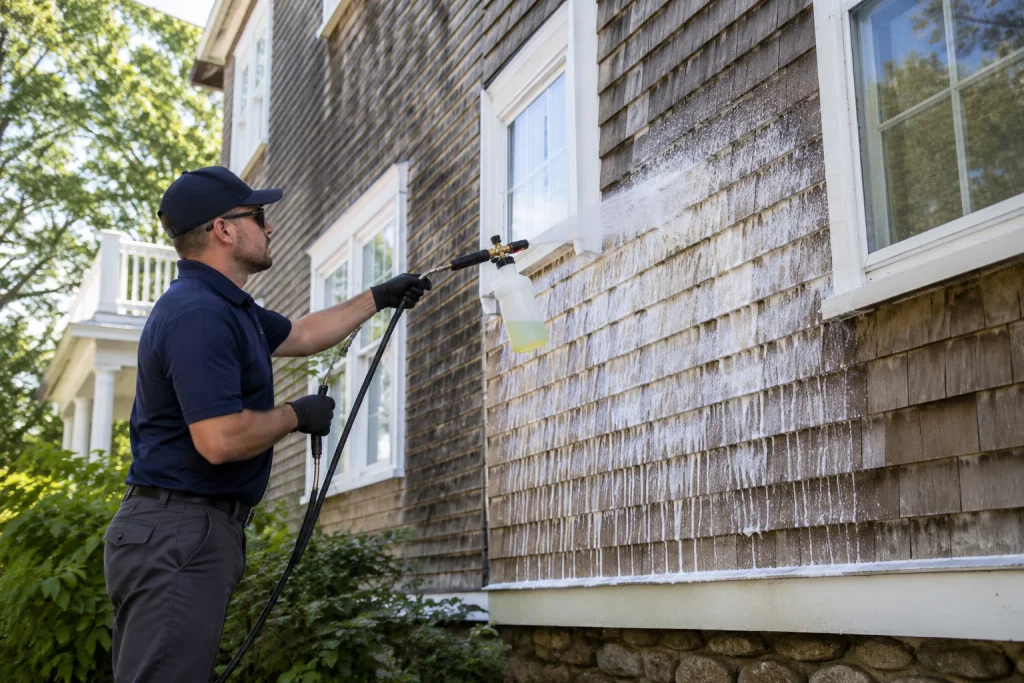
A preservation-safe cleaning on an Edgartown property follows a consistent sequence, adjusted for the specific materials on that house:
- Walkthrough and material assessment. A technician identifies clapboard versus shingle, original versus replaced trim, and any areas of existing paint failure or mortar damage before touching anything.
- Test patch. A small, inconspicuous area gets treated first to confirm the solution and dwell time are right for that specific surface.
- Application. A biodegradable cleaning solution is applied at low pressure, typically under 100 PSI for fragile surfaces, far below the 2,000 to 4,000 PSI of a typical pressure washer.
- Dwell time. The solution sits for roughly 10 to 20 minutes, depending on the level of growth, giving it time to kill biological growth at the root rather than just rinse the surface.
- Low-pressure rinse. Clean water rinses the solution and loosened growth away without forcing moisture behind siding or into mortar joints.
- Final walkthrough. The crew checks trim, foundation lines, and any areas flagged during the initial assessment.
Owners can see this process reflected in the island’s client reviews, where historic and coastal property owners describe results without the surface damage that comes from a rushed, high-pressure job.
Edgartown Sets the Standard for the Rest of the Island
Edgartown’s historic district holds the densest collection of pre-Civil War architecture on Martha’s Vineyard, and that density demands a cleaning approach built around preservation, not speed. Original clapboard, cedar shingles, granite foundations, and century-old mortar all fail in different ways under high pressure, and a soft wash with the right dwell time avoids that damage entirely. If your property sits inside the historic district, a Certificate of Appropriateness may apply to larger exterior work, even if routine cleaning doesn’t trigger that review.
We’ve spent 45-plus years learning which methods work on Martha’s Vineyard’s oldest homes, about our history here. If you own a historic Edgartown property and want it cleaned the right way, not the fast way, request a quote for a preservation-safe soft wash.
Frequently Asked Questions
Does soft washing remove the gray patina I want to keep on my cedar shingles?
No. A properly dosed soft wash targets the algae, mold, and mildew sitting on top of the wood, not the wood’s natural weathered color. Over-aggressive cleaning or the wrong chemical ratio can lighten patina, which is why test patches matter on every historic shingle job.
How much does historic home cleaning cost in Edgartown compared to a standard house wash?
Historic cleaning usually takes longer because of the extra assessment, test patching, and careful hand work around trim and foundations, so expect a modestly higher quote than a same-size modern home. The exact cost depends on square footage, material mix, and how much trim detail needs hand attention.
Can I pressure wash just the driveway or patio if the house itself needs a gentler approach?
Yes. Granite and brick hardscape around a historic home can often tolerate more pressure than the siding itself, but old or historic pavers still benefit from a careful, lower-pressure approach to avoid eroding soft mortar joints between stones.
Will cleaning my historic home trigger a Historic District Commission review?
Routine washing that restores the existing appearance typically doesn’t require a Certificate of Appropriateness, but any related repair, repaint, or material replacement usually does. When in doubt, a quick call to the Edgartown Historic District Commission clears up whether your specific project needs review.
How often should a historic Edgartown property be cleaned?
Most historic homes on the Vineyard benefit from a soft wash once a year, typically in spring before the summer humidity accelerates biological growth. Properties in heavily shaded or low-airflow spots, common in Edgartown’s tightly built village core, may need attention every eight to ten months instead.